Agni Purana
Avataras
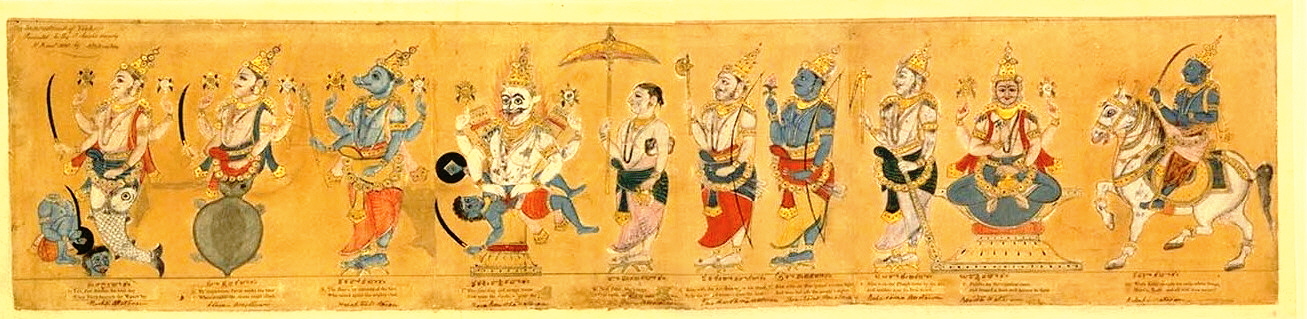
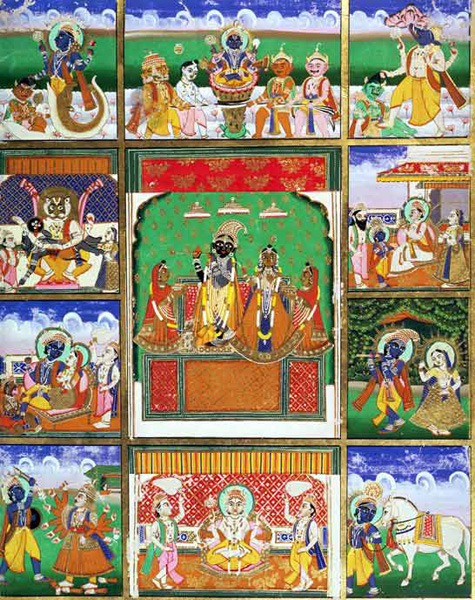
Do you know what an avatara is? An avatara is an incarnation and means that a god adopts a
human form to be born on earth. Why do gods do this. The purpose is to destroy evil on earth
and establish righteousness. Vishnu is regarded as the preserver of the universe and it is therefore
Vishnu's incarnations that one encounters most often. Vishnu has already had nine such
incarnations and the tenth and final incarnation is due in the future. These ten incarnations of
Vishnu are as follows.
(1) Matsya avatara- fish incarnation (2) Kurma avatara- turtle incarnation (3) Varaha avatara-
boar incarnation (4) Narasimha avatara- half-man lion incarnation (5) Vamana avatara- dwarf
incarnation (6) Parashurama (7) Rama (8) Krishna (9) Buddha (10) Kalki-this is the incarnation
that is yet to come.
The Agni Purana now describes these ten incarnations.
1. The Fish
Agni told Vashishtha the story of the fish incarnation.
Many years ago, the whole world was destroyed. The destruction in fact extended to all the three
lokas (worlds) of bhuloka, bhuvarloka and svarloka. Bhuloka is the earth, svarloka or svarga is
heaven and bhuvarloka is a region between the earth and heaven. All there worlds were flooded
with water.
Vaivasvata Manu was the son of the sun-god. He had spent ten thousand years in prayers and
tapasya (meditation) in the hermitage Badrika. This hermitage was on the banks of the river
Kritamala.
Once Manu came to the river to perform his ablutions. He immersed his hands in the water to get
some water for his ablutions. When he raised them, he found that there was a small fish
swimming in the water in the cup of his hands.
Manu was about to throw the fish back into the water when the fish said, "Don't throw me back. I
am scared of alligators and crocodiles and big fishes. Save me."
Manu found an earthen pot in which he could keep the fish. But soon the fish became too big for
the pot and Manu had to find a larger vessel in which the fish might be kept. But the fish became
too big for this vessel as well and Manu had to transfer the fish to a take. But the fish grew and
grew and became too large for the lake. So Manu transferred the fish to the ocean. In the ocean,
the fish grew until it became gigantic.
By now, Manu's wonder knew no bounds. He said, "Who are you? You must be the Lord
Vishnu, I bow down before you. Tell me, why are you tantalising me in the form of a fish?"
The fish replied, "I have to punish the evil and protect the good. Seven days from now, the ocean
will flood the entire world and all beings will be destroyed. But since you have saved me, I will
save you. When the world is flooded, a boat will arrive here. Take the saptarshis (seven sages)
with that boat. Don't forget to take the seeds of foodgrains with you. I will arrive and you will
then fasten the boat to my horn with a huge snake."
Saying this, the fish disappeared.
Everything happened as the fish had promised it would. The ocean became turbulent and Manu
climbed into the boat. He tied the boat to the huge horn that the fish had. He prayed to the fish
and the fish related the Matsya Purana to him. Eventually, when the water receded, the boat was
anchored to the topmost peak of the Himalayas. And living beings were created once again.
A danava (demon) named Hayagriva had stolen the sacred texts of the Vedas and the knowledge
of the brahman. In his form of a fish, Vishnu also killed Hayagriva and recovered the Vedas.
2. The Turtle
Many years ago there was a war between the devas (gods) and the daityas (demons) and the gods
lost this war. They prayed to Vishnu to rescue them from the oppression of the demons. Vishnu
told Brahma and the other gods that they should have a temporary truce with the demons. The
two sides should get together to churn the ocean. Vishnu would ensure that the devas benefited
more from this churning of the ocean than the daityas did.
The truce was agreed upon and the two sides got ready to churn the ocean. The mountain
Mandara was used as a churning rod and great sake Vasuki as the rope for churning. The devas
grasped Vasuki's tail and the daityas grasped Vasuki's head. But as the churning began, the
mountain Mandara which had no base, started to get immersed in the ocean. What was to be
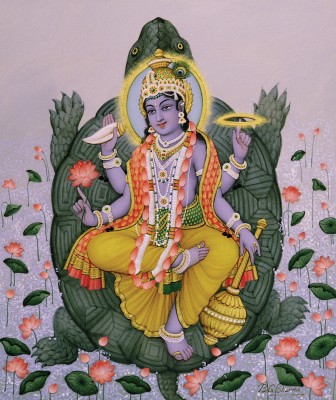
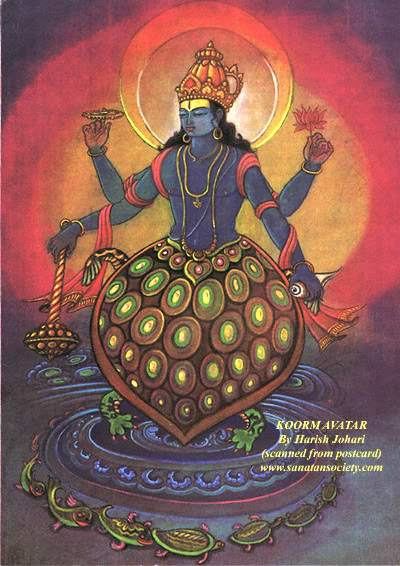
done? Lord Vishnu came to the rescue. He adopted the form of a turtle and the peak was
balanced on the turtle's back.
As the churning continued, terrible poison named kalkuta emerged from the depths of the ocean
and was swallowed by Shiva. Shiva's throat became blue from this poison and he is therefore
known as Nilakantha, blue of throat. The goddess Varunai, the goddess of wine (sura), came out
next. The gods readily accepted her and thus they came to be known as suras. But the demons
rejected Varunai and were therefore known as asuras. She was followed by the Parijata tree, a
beautiful tree that came to occupy the pride of place in Indra's garden. A jewel named koustubha
emerged and was accepted by Vishnu as his adornment. Three wonderful animals came out next
- the cow Kapila, the horse Ucchaishrava and the elephant Airavata. They were followed by the
apsaras, beautiful women who became the dancers of heaven. They were known as apsaras
because they emerged from ap (water). The goddess Lakshmi or Sri came out next and was
united with Vishnu.
Finally, Dhanvantari emerged with a pot of amrita (the life - giving drink) in his hands.
Dhanvantari was the originator of medicine (ayurveda). The daityas led by Jambha gave half of
the amrita to the devas and departed with the remaining half.
But Vishnu quickly adopted the form of a beautiful woman. So beautiful was the woman that the
demons were charmed. "Pretty lady," they said. " Take the amrita and serve it to us. Marry us."
Vishnu accepted the amrita, but he had no intention of giving it to the demons. He served it to
the gods instead. There was only one demon who was somewhat clever. His name was Rahu. He
adopted the form of Chandra, the moon-god, and succeeded in drinking some of the amrita. The
sun-god and the moon-god noticed what was happening and reported it to Vishnu. Vishnu
thereupon cut off Rahu's head with a sword.
But Rahu had drunk the amrita, so he could not die. He prayed to Vishnu and Vishnu granted
him a boon. The boon was that occasionally Rahu would be permitted to swallow up the sun and
the complained about him. You can see this happening at the time of the solar and the lunar
eclipses. People who give alms during such eclipses are blessed.
The gods obtained the amrita and the demons did not. Thus, the gods became more powerful
than the demons. They defeated the demons and regained heaven.
3. The Boar
Vishnu's next incarnation was in the form of a boar.
The sage Kashyapa and his wife Diti had a son named Hiranyaksha. He became the king of the
asuras. Hiranyaksha's meditation pleased Brahma and Brahma granted him the boon that he
would be invincible in battle. Thus armed. Hiranyaksha went out to fight with the devas. He
comprehensively defeated the gods and conquered heaven. He also defeated Varuna, the god of
the ocean. Thus, Hiranyaksha became the king of the heaven, the earth and the underworld.
But the asura was not particularly fond of the earth. He himself had begun to live in Varuna's
palace under the ocean. So he hurled the earth into the depths of the ocean.
The gods went to Vishnu and prayed that something might be done about Hiranyaksha. They
wished to be restored to heaven and they wished that the earth might be brought back from the
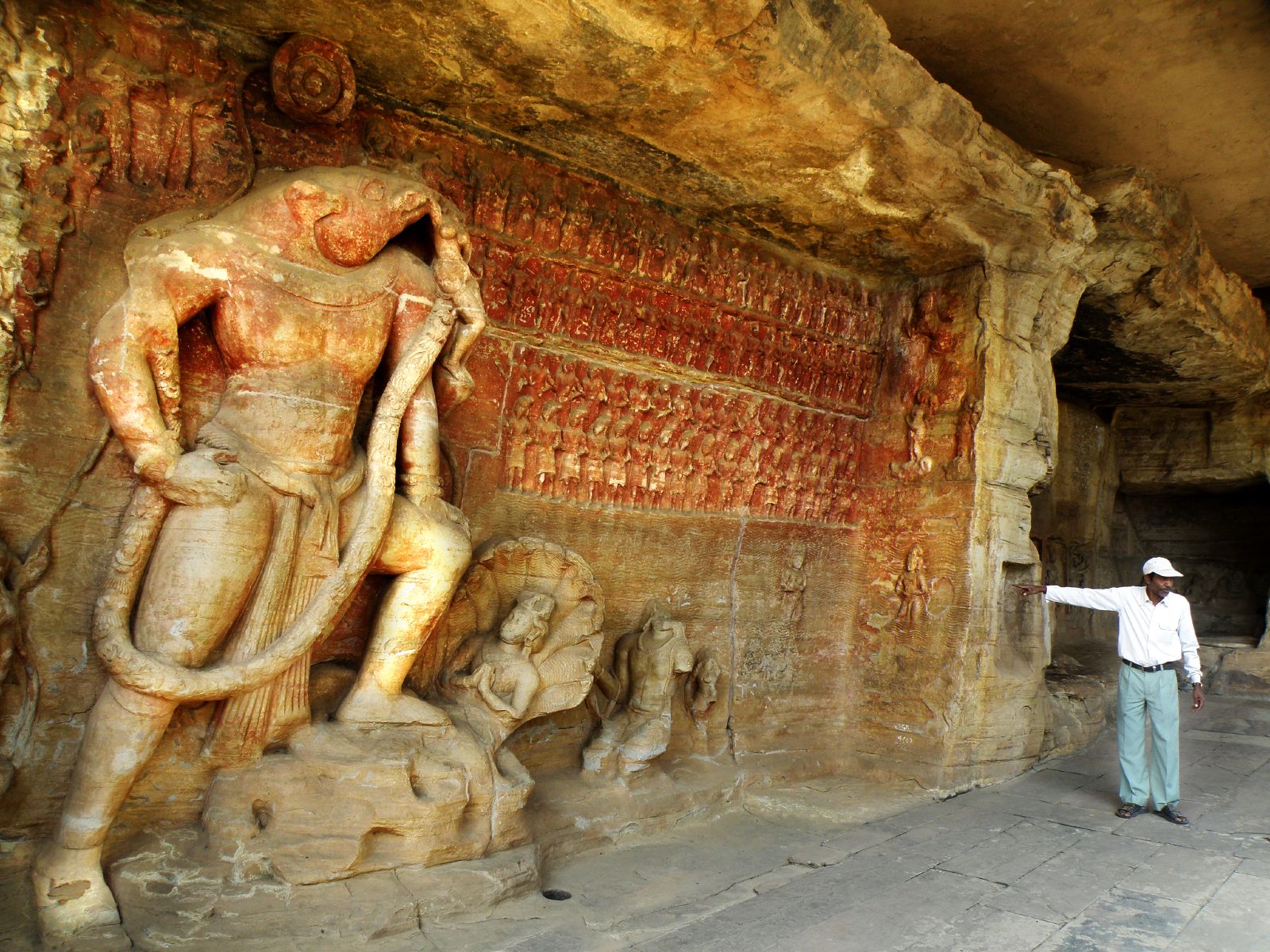
depths of the ocean. In response to these prayers, Vishnu adopted the form of a boar and entered
the ocean. Who should he meet there but Hiranyaksha himself?
Hiranyaksha of course did not know that this boar was none other than Vishnu. He thought that it
was an ordinary boar and attacked it. The two fought for many years. But finally, Hiranyaksha
was gored to death by the boar's tusks. The boar raised the earth up once again with its tusks.
Vishnu thus saved the gods and the principles of righteousness or dharma.
4. Man -Lion
Hiranyaksha had a brother named Hiranyakashipu. Hiranyakashipu was furious to learn that his
brother had been killed and the resolved to kill Vishnu. But this could not be done unless h e
himself became powerful land invincible. Hiranyakashipu, therefore, began to pray to Brahma
through difficult meditation. Brahma was pleased at these prayers and offered to grant a boon.
"I want to be invincible," said Hiranyakashipu. "Please grant me the boon that I may not be
killed by night or day; that I may not be killed by man or beast; and that I may not be killed in
the sky, the water or the earth."
Brahma granted the desired boon. And Hiranyakashipu was happy. He thought that he had taken
care of all possible eventualities. And since he had become so powerful, he conquered all the
three worlds and kicked the gods out to heaven.
Hiranyakashipu had a son named Prahlada. You no doubt remember that Hiranyakashipu had
resolved to kill Vishnu. But strangely enough, Prahlada became devoted to Vishnu.
Hiranyakashipu tried to persuade his son. That did not work. He tried to kill his son. That too did
not work since each time, Vishnu intervened to save Prahlada.
Meanwhile, the gods had been driven off from heaven. They had also been deprived of their
shares in yajanas by Hiranyakashipu. These shares now went only to the asura king. In
desperation, they went and prayed to Vishnu and Vishnu promised them that he would find a
solution.
One day, Hiranyakashipu called Prahlada to him. "How is it that you escaped each time I tried to
kill you?" he asked.
"Because Vishnu saved me," replied Prahlada. "Vishnu is everywhere."
"What do you mean everywhere?" retorted Hiranyakashipu. He pointed to a crystal pillar inside
the palace and asked, "Is Vishnu inside this pillar as well?"
"Yes," replied Prahlada.
"Very well then. I am going to kick the pillar," said Hiranyakashipu.
When Hiranyakashipu kicked the pillar, it broke into two. And from inside the pillar, Vishnu
emerged in his form of half-man and half-lion. He caught hold of Hiranyakashipu and placed the
demon across his thighs. And with his claws, he tore apart the demon's chest and so killed him.
Brahma's boon had been that Hiranyakashipu would not be killed by man or beast. But then
narasimha was neither man nor beast it was half-man and half-beast. The boon had said that the
asura would not be killed in the sky, the water or the earth. But Hiranyakashipu was killed on
Vishnu's thighs, which were not the sky, the water or the earth. And finally, the noon had
promised that Hiranyakashipu would not be killed by night or day. Since the incident took place
in the evening, it was not night or day.
After Hiranyakashipu died, the gods were restored to their rightful places. Vishnu's made
Prahlada the king of the asuras.
5. The Dwarf
Prahlada's grandson was Bali and Bali became very powerful. When he was the king of the
asuras, there was a war between the devas and the asuras. The gods were defeated and were
driven off from svarga. As always, the gods fled to Vishnu and began to pray to him to save
them. Vishnu assured the gods that he would do something about Bali.
Accordingly, Vishnu was born as the son of Aditi and Kashyapa. The son was a dwarf.
King Bali had arranged for a huge sacrifice and had announced that, on the occasion of the
sacrifice, he would not refuse anyone a boon. The dwarf arrived at this sacrifice and began to
recite the Veda's. Bali was so pleased at this that he offered the dwarf a bon. Bali's guru (teacher)
was Shukracharya and Shukracharya thought that there was something fishy about the way the
dwarf had arrived. So he tried to restrain Bali.
"No," said Bali. "I have offered a boon and I shall stick to my word." What boon do you desire? I
will give whatever you want."
Before a boon was actually granted, a small rite had to be performed with holy water.
Shukracharya was still trying to do his best to prevent the boon from being given. So he entered
the vessel in which the holy water was kept to seal the mouth of the vessel and prevent the water
from being taken out. To get at the holy water, the vessel was pierced with a straw. This straw
also pierced one of Shukracharya's eyes. Ever since that day, the preceptor of the demons has
been one eyed.
"Give me as much of land as may be covered in three of my steps," said the dwarf. "I need this as
Dakshaina (fee) for my guru."
Bali agreed. But the dwarf adopted a gigantic form. With one step he covered bhuloka. With
another step he covered bhuvarloka. And with the last step he covered svarloka. The three worlds
were thus lost to Bali and Vishnu returned them to Indra. Bali had no option but to go down to
the underworld (patala). But so pleased was Vishnu at Bali's generosity that he granted the asura
the boon that he would bear the title of Indra in the future.
6. Parashurama
The kshatriyas were the second of the four classes. It was their job to wear arms and protect the
world. And rule. The brahmanas were the first of the four classes. It was their job to pray, study
the sacred texts and perform religious rites. But the kshatriyas became very insolent and began to
oppress the world and the brahmanas. Vishnu was then born as the son of the sage Jamadagni
and his wife Renuka. Since this was the line of the sage Bhrigu, Parashurama was also called
Bhargava. Parashurama's mission was to protect the brahmanas and teach a lesson to the
kshatriyas.
There was a king named Kartavirya who had received all sorts of boons from the sage
Dattatreya. Thanks to these boons, Kartavirya had a thousand arms and conquered and ruled over
the entire world. One day, Kartavirya went on a hunt to the forest. He was very tired after the
hunt and was invited by the sage Jamadagni had a Kamadhenu cow. This meant that the cow
produced whatever its owner desired. Jamadagni used the Kamadhenu to treat Kartavirya and all
his soldiers to a sumptuous feast.
Kartavirya was so enamoured of the Kamadhenu that he asked the sage to give it to him. But
Jamadagni refused. Kartavirya then abducted the cow by force and a war started between
Kartavirya and Parashurama. In this war, Parashurama cut off Kartavirya's head with his axe
(parashu) and brought the Kamadhenu back to the hermitage.
After some time, Parashurama was away when Kartavirya's sons arrived at the ashrama and
killed Jamadagni. On the death of his father, Parashurama's anger was aroused. He killed all the
kshatriyas in the world twenty-one times. On the plains of Kurukshetra, he built five wells which
were filled with the blood of kshatriyas. Eventually, Parashurama handed over the world to
Kashyapa and went and lived on Mount Mahendra.
7. Rama
Brahma came out of Vishnu's navel. Brahma's son was Marichi's son Kashyapa, Kashyapa's son
Surya, Surya's son Vaivasvata Manu, Manu's son Ikshvaku, Ikskhvakku's son Kakutstha,
Kakutstha's son Raghu, Raghu's son Aja, Aja's son Dasharatha, Dasharatha's sons were Rama,
Bharataa, Lakshmana and Shatrughna. Since Rama was descended from Kakutstha and Raghu,
he was also called Kakutstha and Raghava. Since his father's name was Dasharatha, he was also
called Dasharathi. Rama's story belongs to the solar line (surya vansha), since one of his
ancestors was Surya.
Vishnu himself wished to destroy Ravana and the other Rakshasas (demons). He therefore
divided himself into four parts and was born as Ramas, Bharataa, Lakshmana and Shatrughna.
Rama was Koushalya's son, Bharataa Kaikeyi's. Lakshmana and Shartrughna were the sons of
Sumitra.
The sage Vishvamitra came to Dasharatha and pleaded for Rama's help in defeating the
Rakshasas who were disturbing his yajanas. Rama killed these demons and Vishvamitra was so
pleased that he taught Rama the use of all divine weapons. Rama broke a bow of Shiva's that had
been in the possession of the king of Mithila, Janaka. This was the task that had been appointed
for marrying Sita, Janaka's daughter. Rama married Sita, Lakshmana married urmila, Bharataa
married Mandavi and Shatrughna married Shrutakirti. On the way back to Ayodhya, Rama also
beat Parashurama in a duel. Dasharatha resolved that Rama should be made yuvaraja, that is, the
heir apparent to the kingdom.
But Kaikeyi had a servant named Manthara who plotted otherwise. When he was young, Rama
had pulled at Manthara's feet and ever since that day, Manthara had not been kindly towards
Rama. She reminded Kaikeyi of the two; boons that had been promised to her by King
Dasharatha. Years ago, the gods had been fighting with the demon Shambara and had asked
Dasharatha for his help. In fighting with Shambara, Dasharatha had been injured. He had been
nursed back to health by Kaikeyi. Dasharatha had promised two boons to Kaikeyi as a reward
and Manthara's suggestion was that Kaikeyi should now ask for these two boons. By the first
boon Rama would be banished to the forest for fourteen years and by the second boon Bharataa
would become yuvaraja.
Kaikeyi listened to Manthara. At Manthara's instance, she asked for these two boons. Dasharatha
was very angry, but Rama insisted that he would indeed go to the forest for fourteen years.
Rama, Lakshmana and Sita first went to the banks of the river Tamasa. From there they went to
the kingdom of Guha, the king of the hunters (nishadas). They crossed the river Jahnavi and
arrived in Prayaga, where the sage Bharadvaja had his hermitage. Their final destination was the
mountain range of Chitrakuta, on the banks of the river Mandakini.
Meanwhile, back home in Ayodhaya, King Dasharatha who could not bear to be parted from
Rama, died. Bharataa and Shatrughna had gone on a visit to their uncle's house and were
recalled. But Bharataa refused to be king. He went to the forest to try and persuade Rama to
return, but Rama insisted that he would not return before the fourteen years were over. So
Bharataa brought back Rama's sandals. He placed these sandals on the throne as a token of
Rama's kingship. And he began to rule the kingdom in Rama's name from Nandigram, rather
than from Ayodhya.
Rama, Lakshmana and Sita then went to the forest that is known as the Dandaka forest,
Dandakaranya. This forest was on the banks of the river Godavari and there was a beautiful
lgrove inside the forest known as Panchavati. They built a hut there and resolved to live there.
There was a Rakshasa woman named Shurpanakha. She happened to come to the place where
Rama Lakshmana and Sita had built their hut. Shurpanakha liked Rama so much that she wanted
to marry Rama and eat up Lakshmana and Sita. But Lakshmana cut off Shurpanakha's nose and
ears with his sword.
Shurpanakha fled to brother Khara and demanded revenge. Khara and fourteen thousand other
demons (Rakshasas) attacked Rama, but they were all killed by Rama. Shurpanakha then went to
her other brother Ravana, the king of Lanka.
Ravana asked the rakshasa Maricha to adopt the form of a golden deer and roam around in front
of Rama's hut. Sita was so charmed by the deer that she asked Rama to capture it for her. Rama
was long in returning and Lakshmana went to look for him. Taking advantage of Rama and
Lakshmana's absence, Ravana kidnapped Sita. Jatayu, the king of the birds, did try to stop
Ravana, but he met his death at Ravana's hands.
Rama and Lakshmana were greatly distressed to find Sita missing and they looked for her
everywhere. Rama made friends with the monkey Sugriva. He killed Sugriva's brother Bali and
made Sugriva the king of monkeys. The monkeys were sent off in all the four directions to for
Sita.
The monkeys who had gone towards the south learnt that Sita was in Lanka, across the ocean.
One of these monkeys was Hanuman. Hanuman leapt over the ocean and arrived in Lanka. He
discovered the lonesome Sita in a grove of ashoka trees, the ashokavana. Hanuman introduced
himself and assured Sita that he would soon be back with Rama. Hanuman caused some general
havoc in Lanka and was captured by Meghnada or Indrajit, Ravana's son. Ravana ordered that
Hanuman's tail should be set on fire. But Hanuman used his burning tail to set fire to all the
houses of Lanka. He then returned to Rama with the news that Sita had been found.
Rama, Lakshmana and the army of monkeys arrived at the shores of the ocean. There they built a
bridge over the ocean so that they could cross over into Lanka. There was a terrible war in which
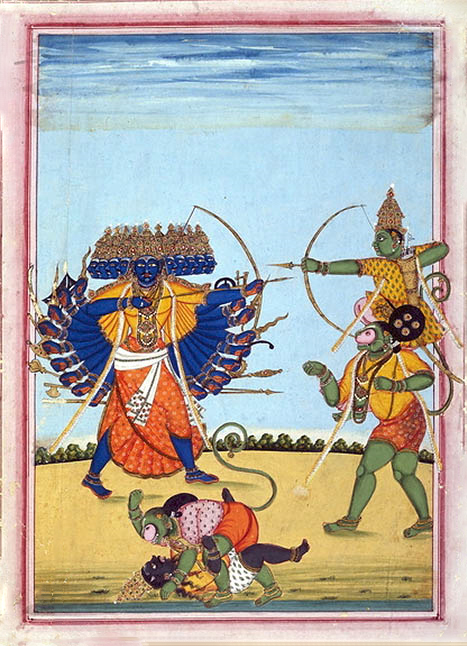
Rama killed the giant Kumbhakarna, Ravana's brother. Lakshmana killed Indrajit. Rama killed
Ravana with a powerful divine weapon, the Brahmastra.
The fourteen years were by now over and Rama, Lakshmana and Sita returned to Ayodhya.
There, Rama was crowned king and he treated his subjects as his own sons. He punished the
wicked and followed the path of dharma. During Rama's rule there was no shortage of
foodgrains anywhere and the people were righteous. No one died an untimely death.
On Rama's instructions, Shatrughna killed the asura Lavana and built the city of Mathura in the
place where Lavana's kingdom had been. Bharataa was sent by Rama to kill a wicked
Gandharva, a singer of heaven named Shailusha, who lived on the banks of the river Indus with
his sons. Bharataa killed them and built two cities there, Takshashila and Pushkaravati. In
Takshashila Bharataa established his son Ataksha as king and in Pushkaravati he made his son
pushkara the king. Rama and Sita had two sons named Kusha and Lava. Rama ruled for eleven
thousand years before he died.
This is the story of the Ramayana as recounted in the Agni Purana. It was written by the sage
Valmiki after he had heard the story from the sage Narada.
Rama was the seventh avatara of Vishnu, Krishna was the eighth.
8. Krishna
The Harivamsha
As you have already been told, Brahma emerged from Vishnu's navel. Brahma's son was Atri,
Atri's son Soma, Soma's son Pururava, Pururava's son Ayu, Ayu's son Nahusha and Nahushja's
son Yayati. Yayati had two wives, Devayani and Sharmishtha. Devayani had two sons, Yadu and
Turvusu. And Sharmishtha had three sons, Druhya, Anu and Puru. The descendants of Yadu
were known as the Yadavas.
Vasudeva was a Yadava. His wife was Devaki. Vishnu was born as sthe son of Vasudeva and
Devaki in order to remove the wicked from the world. The seventh son of Vasudeva and Devaki
was Baladeva. And the eight son was Krishna himself. Krishna was born in the month of Bhadra
in the thick of the night. Scared that the wicked Kakmsa might kill the newly born child,
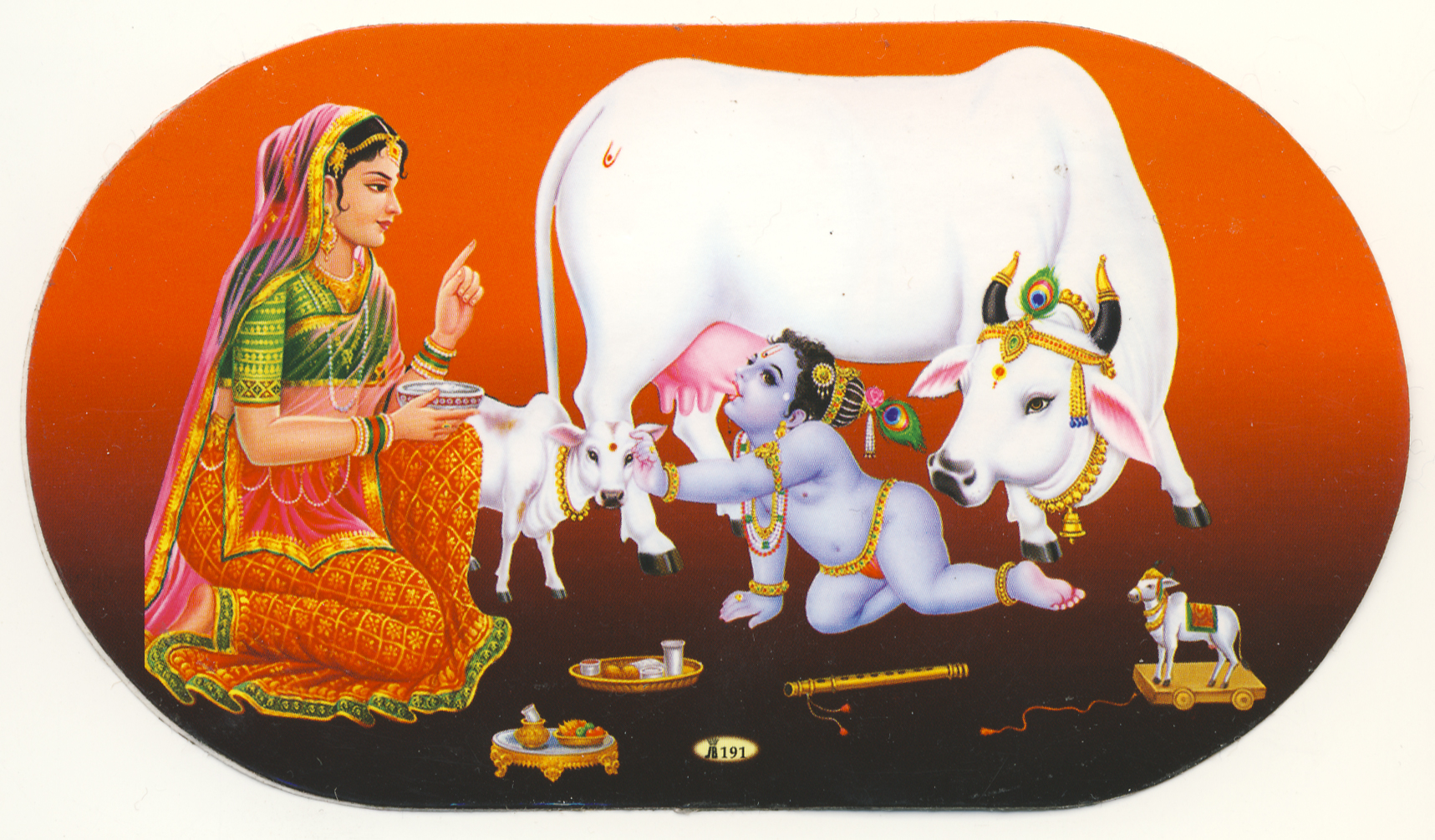
Vasudeva left him with Yashoda, the wife of Nanda.
Nanda was the king of the cowherds and he brought up Baladeva and Krishna. Kamsa sent a
Rakshasa woman named Putana to kill Krishna but Krishna killed her instead. In Vrindavana,
Krishna subdued the terrible snake known as Kaliya. He killed several other rakshasas named
Arishta, Vrishabha, Keshi, Dhenuka and Gardhabha and made the country safe from the
attacksof these demons. He also stopped the worship of Indra. This led to a fight between Indra
and Krishna, Indra tried to destroy the inhabitants of Gokula by sending down torrents of rain.
But Krishna held aloft the mountain Govardhana and saved the inhabitants of Gokula.
Kamsa's capital was in Mathura, Baladeva and Krishna went there. Kamsa let loose a mad
elephant named Kuvalayapida on Krishna. But Krishna killed Kuvalayapida. Baladeva and
Krishna also killed two strong wrestlers, Chanura and Mushtika, whom Kamsa had instructed to
kill Baladeva and Krishna. Finally, Krishna killed Kamsa and made Ugrasena the king. Kamsa
was Jarasandha's son-in-law and Jarasandha became furious when he learnt of Kamsa's death. He
attacked the Yadavas and laid siege to the city of Mathura. After a prolonged war, Krishna
managed to defeat Jarasandha. Krishna also defeated another evil king named Poundraka. On
Krishna's instructions, the Yadavas built the beautiful city of Dvaraka or Dvaravati. The Yadavas
began to live in Dvaraka.
There was an asura named Naraka who was killed by Krishna. Naraka had imprisoned sixteen
thousand daughters of the devas, Gandharvas and Yakshas (guards of Heaven's treasury). These
women were freed by Krishna and Krishna married all of them. Amongst Krishna's other
exploits were defeating the daitya Panchajana, killing Kalayavna, seizing the parijata tree from
Indra and bringing back to life the sage Sandipani's dead son.
Krishna had several sons. Shamba was born of Krishna's wife Jambavati and Pradyumna was
born of Krishna's wife Rukmini. As soon as Pradyumna was born, he was abducted by the asura
Shambara. Shambara threw the baby into the sea, but a fish swallowed the baby. A fisherman
caught the fish and brought it to Shambara's house. When the fish's stomach was cut open, the
baby came out. There was a woman named Mayavati who lived in Shambara's house and
Shambara handed over baby Pradyumna to Mayavati so that he might be brought up well. When
he grew up, Pradyumna killed Shambara and married Mayavati. They returned to Dvaraka and
Krishna was very happy to see his lost son.
Pradyumma and Mayavati had a son named Aniruddha. Aniruddha secretly married Usha, the
daughter of King Vana, Vana himself being the son of Bali. Vana's capital was in a city named
Shonitapura. Vana had pleased Shiva through hard and difficult tapasya, so that sometimes he
was called the son of Shiva. Vana loved to fight and he had wanted a boon from Shiva that he
might get the chance to fight with someone who was his equal in battle. A flag with a peacock on
it used to fly from the ramparts of Vana's palace. Shiva told him the day this flag fell down.
Vana's desire for with an equal would be satisfied.
With the help of a friend of Usha's, Anuruddha and Usha used to meet secretly in Vana's palace.
Vana's guards informed him about this and there was a fierce battle between Vana and
Aniruddha At the same time, the flag with the peacock on it fell down. Krishna got to know from
Narada about the fight between Vana and Aniruddha and he, Baladeva and Pradyumna arrived in
Vana's capital. Shiva came to fight on Vana's side, accompanied by Nandi and Skanda or
Kartikeya. But after a duel that lasted for a long time, Krishna triumphed over these enemies.
Krishna's arrows also cut off the thousand arms that Vana had. But at Shiva's request, Krishna
spared Vana's life and gave two arms with which to make do.
All of these stories about Krishna are related in detail in the Harivamsha. The Agni Purana
merely gives a brief summary of the Harivamsha. But stories about Krishna, the eight avatara of
Vishnu, also crop up in the Mahabharataa. The Agni Purana, therefore, next summarises the
Mahabharataa.
The Mahabharataa
The Pandavas were merely a pretext. Krishna used the Pandavas to rid the world of evil men.
You have already learnt that one of Yayati's sons was Puru. In Puru's line were born Bharataa
and Kuru. One of Kuru's descendants was the king Shantanu. Shantanu married Ganga and
Bhishma was born from this marriage.
But Shantanu also married Satyavati and had two more sons, Chitrangada and Vichitravirya.
Bhishma never married. Chitrangada died young. When Vichitravirya grew up, Bhishma
defeated the king of Kashi and brought two of the king's daughters, Ambika and Ambalika, as
brides for Vichitravirya. Vichitravirya as also quite young when he died of tuberculosis.
Since Vichitravirya had left no children, Vyasadeva was brought to Hastinapura. Vyasadeva and
Ambalika had a son named Dhritarashtra and Vyasadeva and Ambalika had a son named Pandu.
Dhritarashtra married Gandhari and they had a hundred sons, of whom the most important was
Duryodhana. Pandu had two wives, Kunti and Madri. Kunti's sons were Yudhisthira, Bhima and
Arjuna and Madri's sons were Nakula and Sahadeva. But Yudhisthira was really the son of the
god Dharma and not Pandu's son. Similarly, Bhima was the son of the god Pavana, Arjuna the
son of Indra and Nakula and Sahadeva the sons of the two Ashvinis. Earlier, Kunti had a son
named Karna from the sun-god.
This was before she had god married to Pandu. Karna became a friend of Duryodhana's. Because
of a curse imposed on him by a sage, Pandu died in the forest.
Duryodhana tried his best to kill the Pandavas. He set fire to a house of lac (jatugriha) in which
Kunti and the five Pandavas were staying. But the Pandavas were saved and fled to a city named
Ekachakra. There they lived, disguised as brahmanas. In Ekachakra, they destroyed a rakshasa
named Vaka. They then won the hand of the daughter of the king of Panchala. Her name was
Droupadi and all five Pandava brothers married her. When Duryodhana learnt that the Pandavas
were alive, he handed over half the kingdom to them.
Meanwhile, the forest Khandava had to be burnt and Krishna and Arjuna did this together.
Krishna had befriended Arjuna. When Arjuna successfully defeated the god Agni at the burning
of the Khandava forest, Agni gave him several divine weapons. Arjuna had also obtained divine
weapons from his guru Dronacharya.
On the Pandava side, Yudhisthira had become king. The Pandavas organised a rajasuya yajna
(royal sacrifice) in which they conquered several kingdoms and accumulated lot of wealth. This
made Duryodhana envious.
He arranged a game of dice (aksha) between Yudhisthira and Duryodhana's uncle Shakuni.
Shakuni did not play fairly and Yudhisthira lost the game. As penalty for the loss, the Pandavas
were to spend twelve years in the forest and one additional year without being detected.
Droupadi went with them to the forest, as did the Pandava's priest, Dhoumya.
After the twelve years were over, the Pandavas came to the kingdom of King Virata where they
proposed to spend the additional year that had to be spent in disguises. Yudhisthira pretended to
be a brahmana, Bhima a cook, Arjuna a dancer, Nakula and Sahadeva stable-hands. Droupadi
became the queen's maid. The queen's brother Kichaka tried to molest Droupadi, but was killed
by Bhima. When the year was over, the Kauravas attacked King Virata to rob him of his cattle.
But Arjuna defeated all the Kauravas and saved Virata's cattle. After this success, the identity of
the Pandavas could no longer be kept a secret. But thankfully, the one year during which
identities had to be kept a secret, was over.
King Virata's daughter Uttara was married to Abhimanyu, Arjuna's son. Abhimanyu's mother
was Subhadra, whom Arjuna had married. Subhadra also happened to be Krishna's sister.
The Pandavas now demanded their rightful share of the kingdom, but Duryodhana refused. A
war was imminent. A huge battalion of soldiers was known as an akshouhini. Duryodhana
collected eleven akshouhinis for the war and Yudhisthira collected seven. Krishna was sent as a
messenger to Duryodhana to try and preserve the peace. Krishna told Duryodhana that the
Pandavas would be satisfied with a mere five villages. Duryodhana refused to give them even
this without a fight.
So the armies gathered for a war on the plains of Kurukshetra. Noticing that elders and relatives
like Bhishma and Dronacharya were fighting on the side of the Kaurvas, Arjuna was reluctant to
fight. But Krishna gave Arjuna lessons which have come down to us as the Gita. He taught there
was no reason for sorrow if Bhishma or Dronacharya died, that was only a death of their physical
bodies. The true identity of a person was his atman (soul) which never died, but passed from one
body to another. True bliss was obtained when the atman united with the Brahman (divine
essence) or Paramatman (supreme soul). This was always the goal of a yogi, that is, a person
who sought union with God.
Thus instructed by Krishna, Arjuna started to fight. With the help of Shikhandi, he defeated
Bhishma. This happened on the tenth day of the fighting. Bhishma did not however die. He had
earlier received the boon that he would only die when he actually wished to do so. For many
days, he lay there in the battlefield on a bed of arrows. After Bhishma's defeat, Dronacharya
became the general on the Pandava side. Dronaharya killed Virata, Drupada and several other
kings and soldiers on the Pandava side. Dhrishtadyumna also killed many Kaurava soldiers. On
the fifteenth day of the fighting, a rumour gained currency that Ashvatthama, Dronacharya's son,
had been killed. Dronacharya abandoned his weapons on hearing this bad news and
Dhrishtadyumna faced no problems in killing him. Karna now became the Kaurava general and
lasted for two and a half days before he was killed by Arjuna. Shalya was the last Kaurava
general. He fought for only half a day and was killed by Yudhisthira.
Bhima and Duryodhana fought the last duel of the war with maces. Bhima broke Duryodhana's
thighs and killed him. Ashvatthama had been fuming ever since his father Dronacharya had been
killed by unfair means. In the dead of the night, he entered the Pandava camp where he killed
Dhrishtadyumna and the five sons of Droupadi. Droupadi was disconsolate and demanded
revenge. Arjuna and Ashvatthama let loose divine weapons at each other. Since this might
destroy the world, they were asked to withdraw these weapons. Arjuna could withdraw his
weapon, but Ashvatthama could not. Ashvatthama's weapon killed the baby that was in Uttara's
womb, but when the dead baby was born, Krishna brought it back to life. This baby was
Parikshita.
Many kings and soldiers died in the course of the Kurukshetra war. The only ones left alive were
Kritvarma, Kripacharya and Ashvatthama on the Kaurava side and Pandava side. After the war
was over, Bhishma taught Yudhisthira the duties of king. It was only after this that he died.
As a king, Yudhisthira performed many yajnas and gave a lot of to brahmanas. When
Yudhisthira learnt that the Yadvas had been destroyed, he no longer wished to rule. He handed
over the kingdom to Parikshita and the Pandavas left on a pilgrimage, in the course of which they
died.
It was Krishna who had used the Pandavas as a tool to rid the world of evil kings and establish
the good ones. Realising that the Yadavas were also evil, Krishna also ensured that the Yadavas
would be destroyed. He then gave up his life at the place of pilgrimage that is known as
Prabhasa. After Krishna died, the city of Dvarka was swallowed up by the sea. This was the story
of the eighth avatara of Vishnu.
9. Buddha
The ninth avatara of Vishnu was Buddha.
Many years ago, there was a war between the devas and the asuras in which the demons
managed to defeat the gods. The gods went running to Vishnu for protection and Vishnu told
them that Mayamoha would be born as Buddha, the son of Shuddhodana. Such were the illusions
that Buddha created, that the asuras left the path indicated by the Vedas and became Buddhists.
These dastardly creatures performed ceremonies that were a sure ticket to Naraka.
10. Kalki
Kalki The tenth avatara of Vishnu will be Kalki.
Towards the end of the Kali era, all people will be dastardly. They will oppose the Vedas,
become robbers and will be concerned only with wealth. The disbelievers will then become
kings and these kings will also be cannibals.
Much later, Kalki will be born on earth as the son of Vishnuyasha. He will take up arms to
destroy these disbelievers. Kalki's priest will be the sage Yajnavalkya. The norms of he four
classes (varna) and the four stages of life (ashrama) will be established yet again. People will
honor the sacred texts and become righteous. It will then be time for the dawn of a new Satya
Yuga, a fresh period of righteousness. In every cycle (kalpa) and in every era (manvantara)
Vishnu is thus born in various forms. It is a sacred duty to listen to the stories of the ten avataras.
The listener attains his desires and goes to heaven.