The Cowherd and the Weaver Girl
The Cowherd and the Weaver Girl 牛郎織女
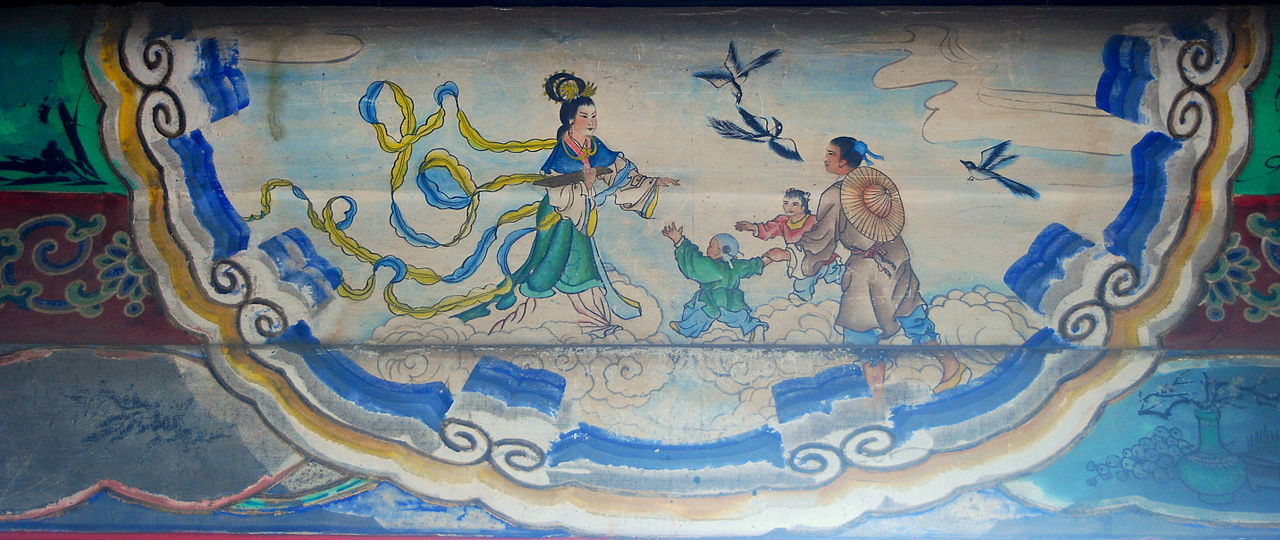
Artwork in the Long Corridor of the Summer Palace, Beijing depicting the reunion of the couple on the bridge of magpies颐和园长廊上的彩绘:牛郎织女鹊桥会
The general tale is about a love story between Zhinü (織女; the weaver girl, symbolizing Vega) and Niulang (牛郎; the cowherd, symbolizing Altair). Their love was not allowed, thus they were banished to opposite sides of the Silver River (symbolizing the Milky Way). Once a year, on the 7th day of the 7th lunar month (七夕 Chinese Valentine's Day), a flock of magpies would form a bridge to reunite the lovers for one day. There are many variations of the story. The earliest-known reference to this famous myth dates back to over 2600 years ago, which was told in a poem from the Classic of Poetry.
The tale of The Weaver Girl and the Cowherd has been celebrated in the Qixi Festival in China since the Han dynasty. The story is now counted as one of China's Four Great Folktales, the others being the Legend of the White Snake (Baishezhuan), Lady Meng Jiang, and Liang Shanbo and Zhu Yingtai.
The tale has been alluded to in many literary works. One of the most famous one was the poem by Qin Guan during the Song dynasty:
"鵲橋仙"
纖雲弄巧,飛星傳恨,銀漢迢迢暗渡。 金風玉露一相逢,便勝卻人間無數。 柔情似水,佳期如夢,忍顧鵲橋歸路。 兩情若是久長時,又豈在朝朝暮暮。
"Meeting across the Milky way"
Through the varying shapes of the delicate clouds, the sad message of the shooting stars, a silent journey across the Milky Way, one meeting of the Cowherd and Weaver amidst the golden autumn wind and jade-glistening dew, eclipses the countless meetings in the mundane world. The feelings soft as water, the ecstatic moment unreal as a dream, how can one have the heart to go back on the bridge made of magpies? If the two hearts are united forever, why do the two persons need to stay together—day after day, night after night?

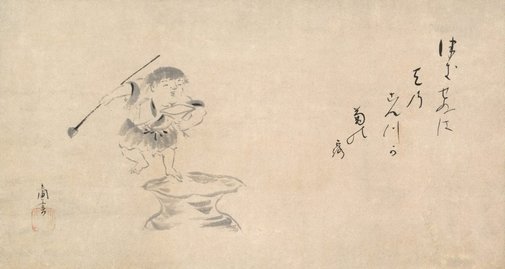
Left: The Moon of the Milky Way (Ginga no tsuki) Japanese Painting of "The Cowherd and the Weaver Girl 牛郎織女" by Yoshitoshi 月岡芳年 (1839-1892)
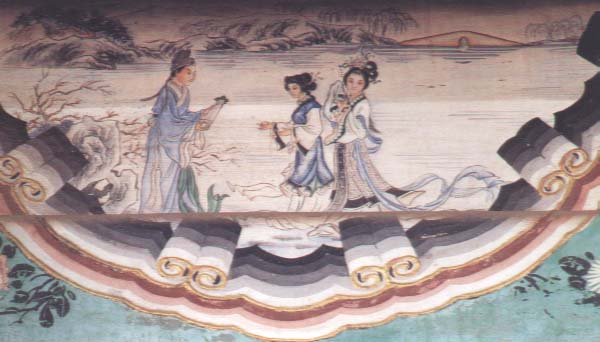
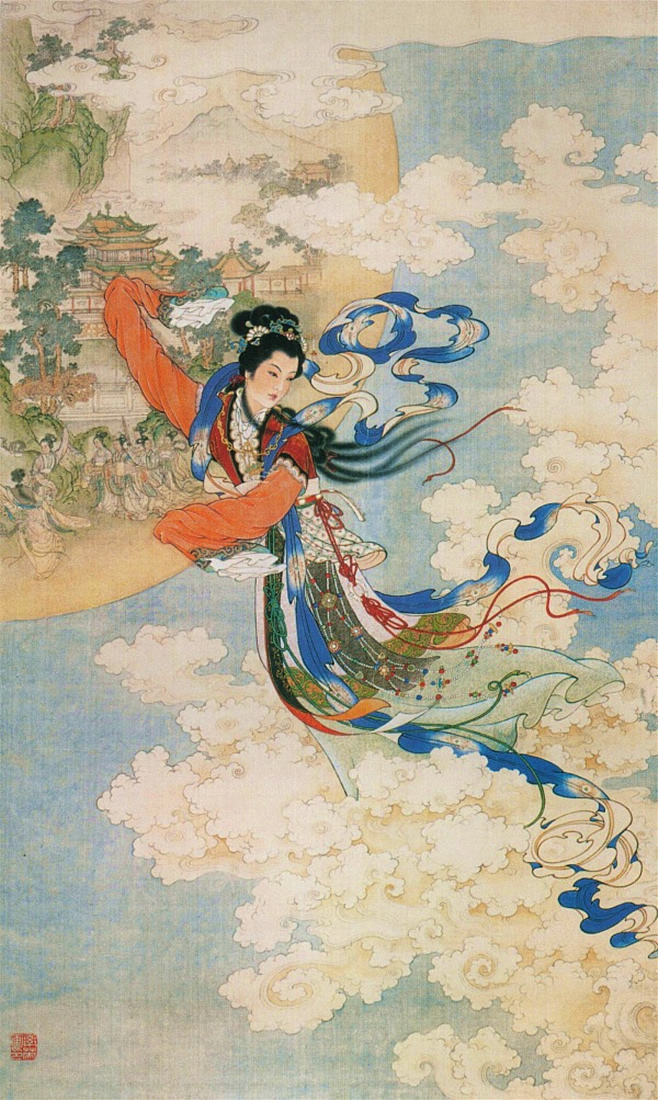
Right: The original wall painting and modern illustration of "Cowherd and the Weaver Girl 牛郎織女"
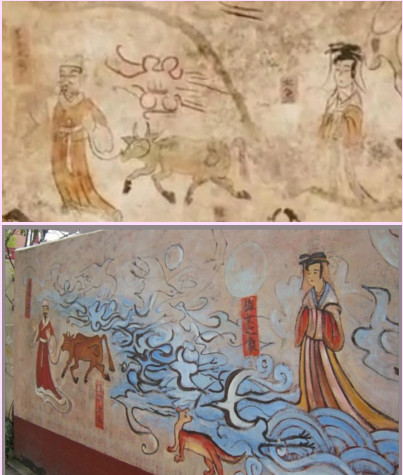
GoTo Koguryo Kingdom/Tokhung-ri Tomb
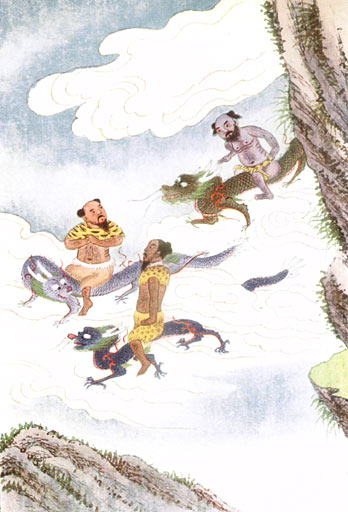
Top: The Koguryo-era wall painting depicting "Cowherd the Weaver Girl" inside the famous Tokhung-ri Tomb (Deokheung-ri Tomb 德興里古墳), built in 408 ce, located in Nampho, North Korea.
Bottom: The modern painting illustrating the above wall painting.
Tanabata (The Story of Orihime and Hikoboshi)
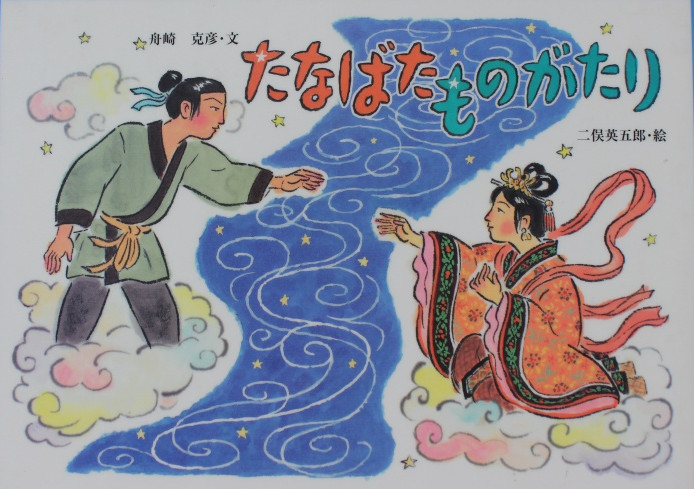
Tanabata Story by Katsuhiko Funzaki舟崎克彥/Eimori Eimori二俁英五郎
Image sources: Amazon.co.jp
Multiple sources
Tanabata (七夕, meaning "Evening of the seventh"), also known as the Star Festival, is a Japanese festival originating from the Chinese Qixi (七夕) Festival. It celebrates the meeting of the deities Orihime (織り姫) and Hikoboshi (彦星) (represented by the stars Vega and Altair respectively). According to legend, the Milky Way separates these lovers, and they are allowed to meet only once a year on the seventh day of the seventh lunar month of the lunisolar calendar.
On Tanabata, people write wishes on small pieces of colored paper called tanzaku (短冊) and hang them on bamboo branches.. These become beautiful wish trees. On the following day, the decorated trees are floated on a river or in the ocean and burned as an offering. There are many celebrations all over Japan, which also include parades, food stalls, colorful decorations, and fireworks.
Tanabata is the story of two lovers. Princess Orihime, the seamstress, wove beautiful clothes by the heavenly river, represented by the Milky Way. Because Orihime worked so hard weaving beautiful clothes, she became sad and despaired of ever finding love. Her father, who was a God of the heavens, loved her dearly and arranged for her to meet Hikoboshi, the cow herder who lived on the other side of the Milky Way. The two fell in love instantly and married. Their love and devotion was so deep that Orihime stopped weaving and Hikoboshi allowed his cows to wander the heavens.
Orihime’s father became angry and forbade the lovers to be together, but Orihime pleaded with him to allow them to stay. He loved his daughter, so he decreed that the two star-crossed lovers could meet once a year--on the 7th day of the 7th month if Orihime returned to her weaving. On the first day they were to be reunited, they found the river (Milky Way) to be too difficult to cross. Orihime became so despondent that a flock of magpies came and made a bridge for her. It is said that if it rains on Tanabata, the magpies will not come, and the two lovers must wait another year to be reunited, so Japanese always wish for good weather on Tanabata. There are many variations of this story, but this version is the most widely held.