








Jalandhara and Vrinda (The story of Tulsi).
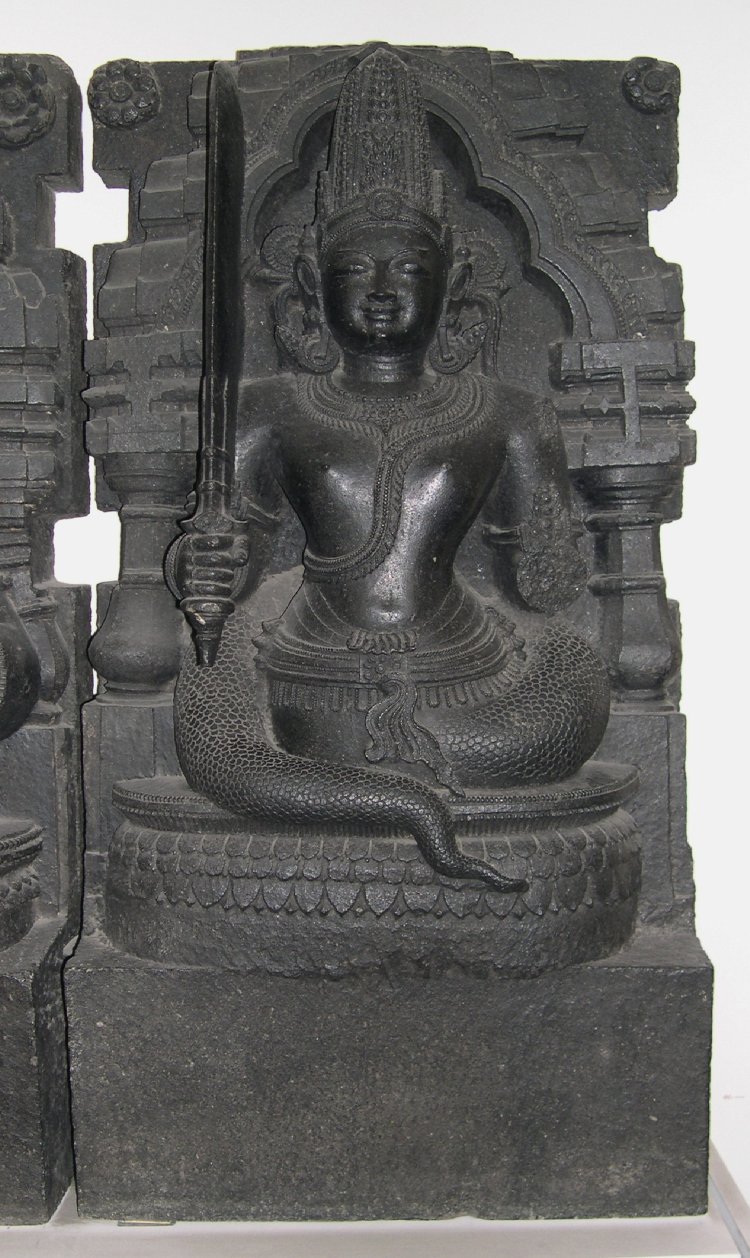
Jalandhara (Jallandhar or Calantaran) is a figure in Hindu mythology who was born out of the union of the fire from Shiva's third eye and the ocean.
The legend of Jalandhara and Vrinda


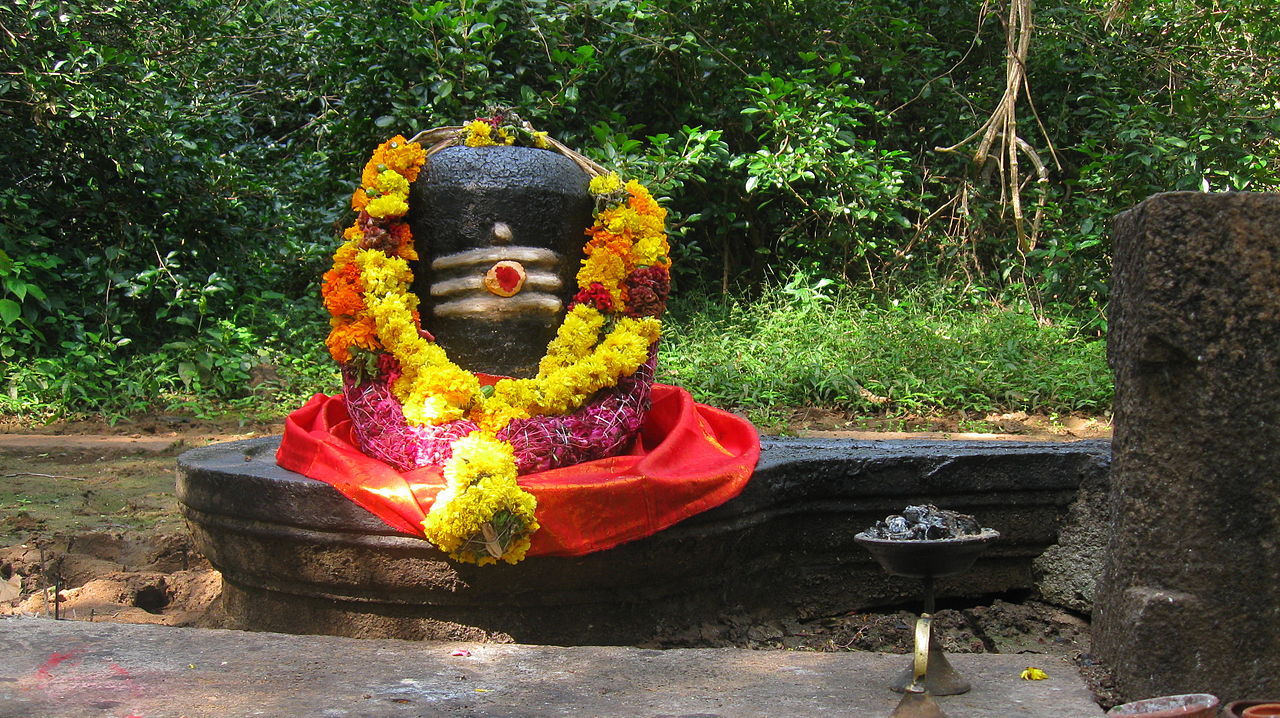
In the Shiva Purana, when Indra and Brihaspati were going towards Mount Kailash to meet Shiva their way was blocked by a naked yogi with matted hair and a radiant face. The yogi was Shiva himself, who had taken the form to test the knowledge of Indra and Brihaspati. Indra did not recognize the yogi and was infuriated at the fact that the man was not moving out of their way. Indra asked him to move but the man did not budge. After getting no reply Indra became enraged and threatened him with his thunderbolt. Upon this action Indra's arm became paralyzed and Shiva neutralized the thunderbolt. Shiva became angry upon this action of Indra and his eyes turned red, frightening Indra. The anger caused Shiva's third eye to open, nearly killing Indra. Brihaspati recognized Shiva and prayed to him, requesting him to pardon Indra. To avoid killing Indra, Shiva sent the fire from his eye towards the ocean and upon meeting with the ocean it assumed the form of a boy.[1] The boy cried terribly which caused Brahma to descend from heaven. The ocean told Brahma that he did not know where the boy came from. Brahma then told him that the boy will one day become the emperor of Asuras, he could only be killed by Shiva and after his death he would return to Shiva's third eye.
Jalandhara's childhood was full of wonders. Borne up by the wind, he flew over the ocean; his pets were lions which he had caught; and the largest birds and fishes were subject to him. Jalandhara grew up to be a handsome man and was made the emperor of Asuras by Shukra, their guru. Jalandhara was exceedingly powerful and is considered to be one of the mightiest asuras of all time. He married Vrinda, the daughter of the Asura Kalanemi. Jalandhara ruled with justice and nobility. One day sage Bhrigu came to meet Jalandhara. He narrated the tales of Hiranyakashipu and Virochana. He also tells him how Vishnu severed Rahu's head and about the Samudra manthan. Jalandhara resented the Samudra manthan. He believed that the Devas had treacherously taken his father, Varuna's treasures. He sent one of his messengers, Ghasmar, to Indra to ask him to return his father's treasures. However Indra refused to do so. A fierce battle took place between the Devas and Asuras. Many warriors were killed on both sides. Shukra revived the Asuras using his Mritsanjivani vidya. Brihaspati revived the dead Devas by using the medicinal herbs from the Drongiri mountain. Shukra ordered Jalandhara to submerge the mountain so Brihaspati cannot use the medicinal herbs to revive the Devas. Jalandhara obeyed the command and submerged Drongiri mountain. Demoralized, the Devas requested Vishnu for his aid. Vishnu agreed but promised Lakshmi that he would not kill Jalandhara since he was born out of the ocean and Lakshmi considered him as her brother. A fierce battle was fought between Jalandhara and Vishnu which remained indecisive until the end. Vishnu was impressed by Jalandhara's valiance in battle and told him about Lakshmi's relationship with him. Vishnu then asked him to demand any boon he desired. Jalandhara asked Vishnu to make Ksheera Sagara his home. He agreed and started living there along with Lakshmi. Without his help the Devas were defeated by Asuras and Jalandhara became the emperor of the three worlds (heaven, earth and hell).
The Devas were unhappy about their defeat. They did not wish to be ruled by Jalandhara despite the fact that he was the son of Shiva. The sage Narada upon consulting with the Devas went to see Jalandhara. On being asked the purpose of his visit by Jalandhara he described the beauty of Kailash where Shiva lived and that he wondered whether any other place matched its beauty. In response, Jalandhara showed off his riches to Narada who commented that he did not have the most beautiful woman as his wife. Narada then continued to describe Shiva's residence and also described to him about Parvati's beauty.
Jalandhara sends his messenger Rahu to Shiva and accuses him of hypocrisy, pointing out that Shiva claims to be an ascetic but keeps a wife, Parvati. He proposes that Shiva hand over Parvati to him:
"How can you live on alms and yet keep the beautiful Parvati ? Give her to me, and wander from house to house with your alms bowl. You have fallen from your vow. You are a yogi, what need have you for the gem of wives? You live in the woods attended by goblins and ghosts; being a naked yogi, you should give your wife to one who will appreciate her better than you do."
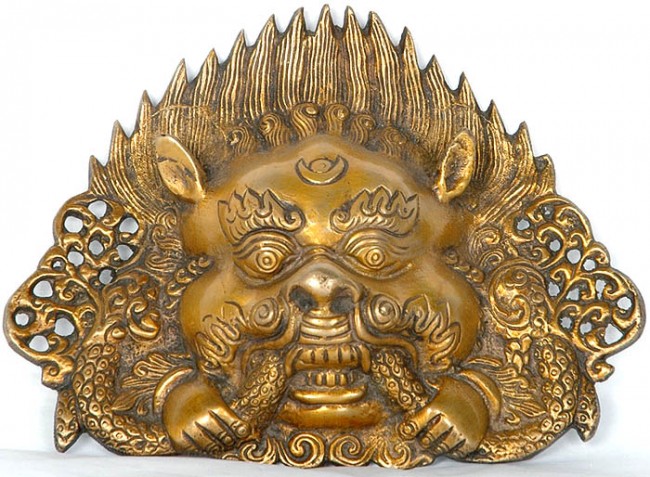
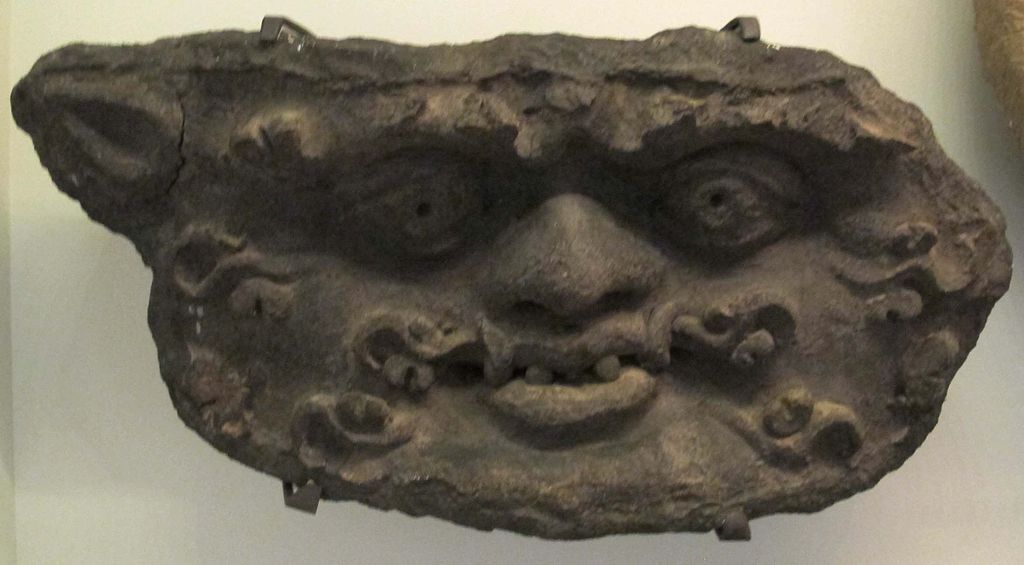
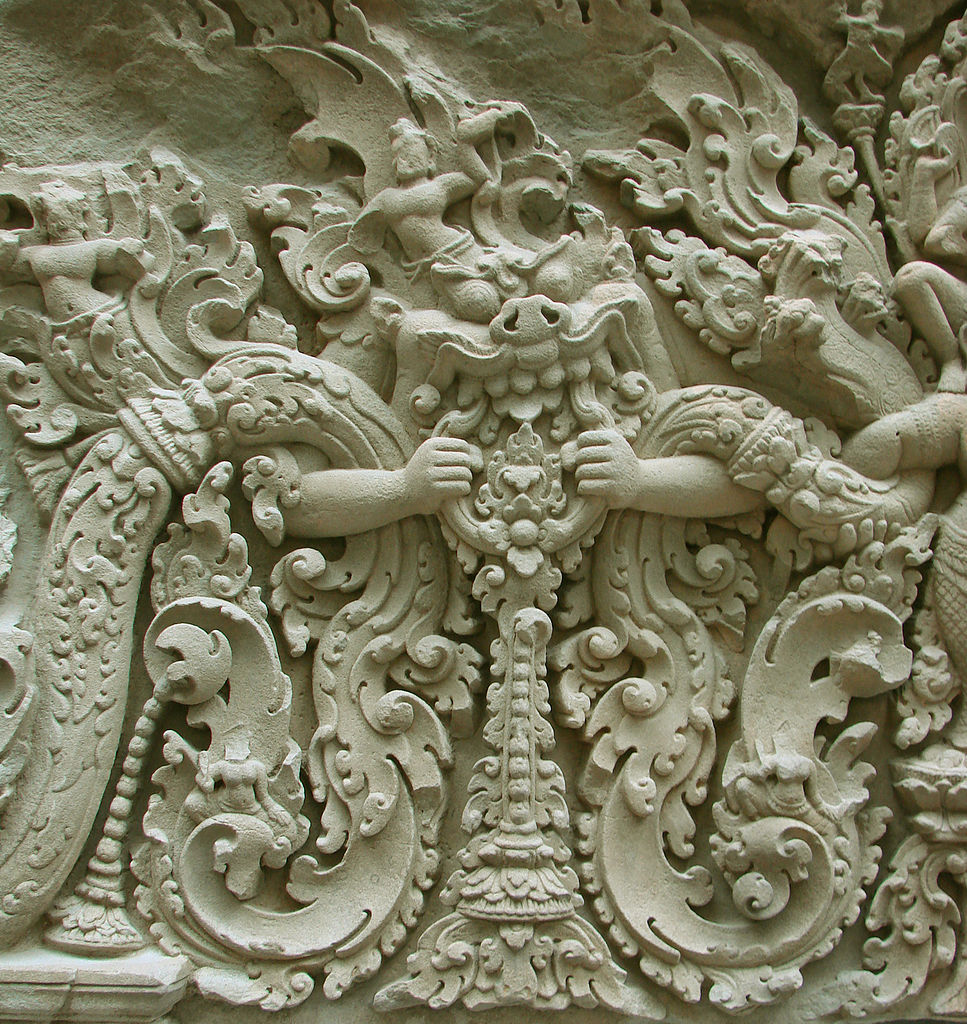
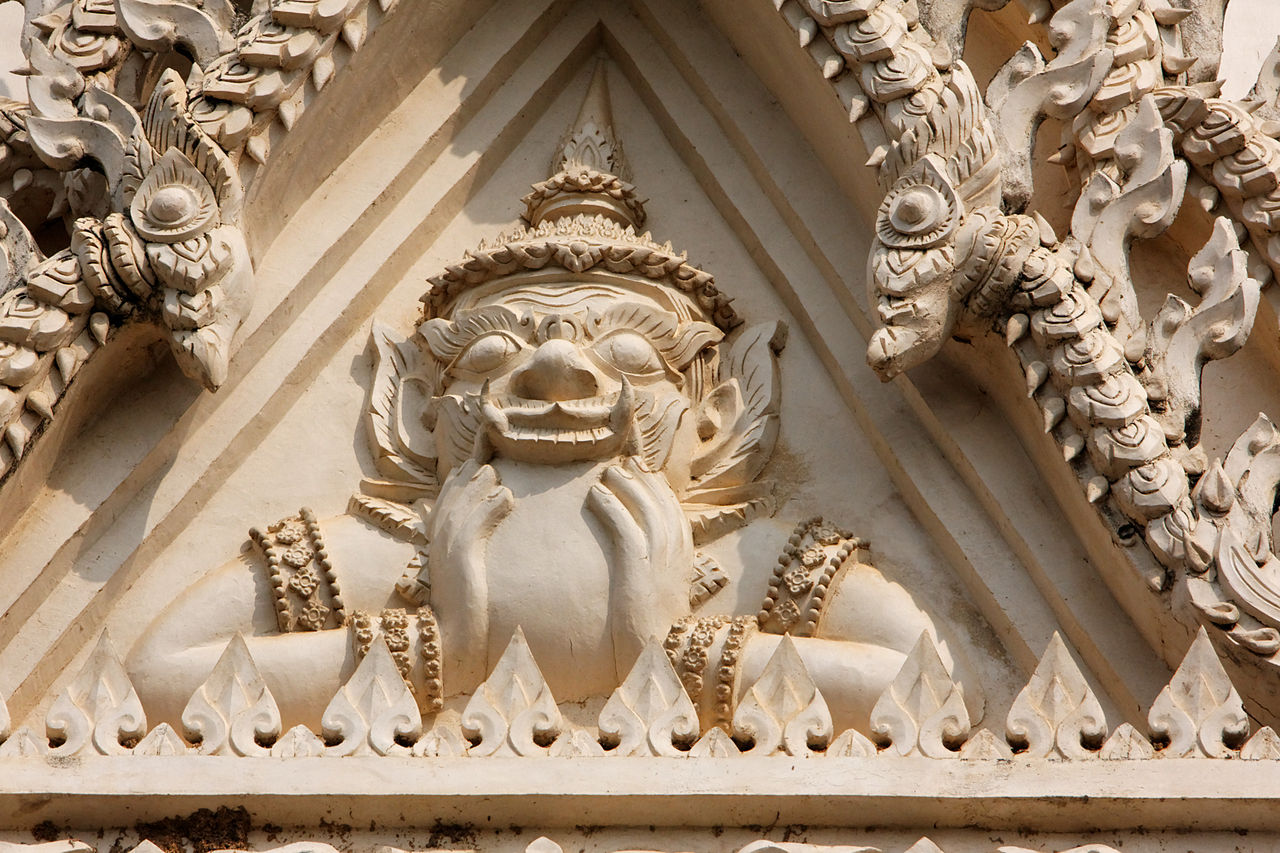
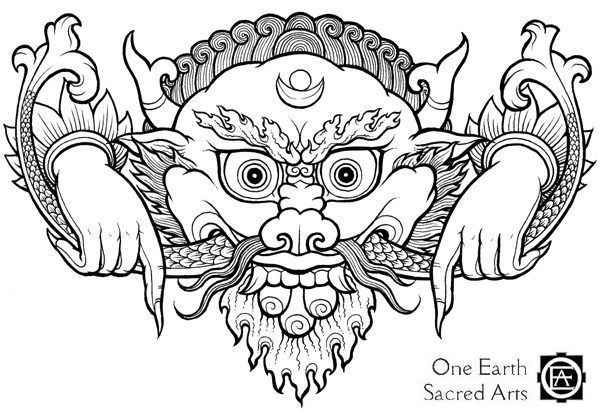
Upon hearing these insults Shiva becomes so angry that a fearsome creature (Kīrttimukha) sprang from his brow and nearly killed Rahu, the messenger who had delivered the demand. War being determined on, Jalandhara marched first to Kailash; but finding that Shiva had forsaken it and taken up a position on a mountain near Lake Manasa, he surrounded the mountain with his troops. Nandi (bull) marched against them, and spread destruction, however, the army of the gods suffered losses. Parvati then urged Shiva to enter the war. Shiva carefully warned Parvati to be on her guard during his absence, as it was possible asuras in some disguise might visit her; after this, accompanied by Virabhadra and Manibhadra, two forms of his anger, Shiva went to the battlefield. Upon seeing Shiva and his avatars dominate the battlefield, Jalandhara created an illusion of beautiful apsaras singing and dancing. This distracted Shiva and his army. Meanwhile Jalandhara disguised himself as Shiva and went to Parvati in order to trick her into having sex with him. Parvati recognized him and became very angry. She attempted to attack him but Jalandhara escaped knowing he was no match for the goddess's anger. Parvati then went to Vishnu and requested him to trick Vrinda just like Jalandhara tried to trick her.
Jalandhara's wife Vrinda was very pious. First, Vishnu created an illusion that Jalandhara had been killed by Shiva and is then restored to life by him. Vrinda then embraces Jalandhara who is actually Vishnu in disguise. Vrinda realizes that it is Vishnu in disguise and curses him that someday someone would abduct his own wife (which becomes true when Sita is kidnapped by Ravana) and then enters the fire to immolate herself. Jalandhara, hearing of his wife's deception and death, was mad with rage and left Mount Kailash, and returned to the battlefield. The illusion by this time had ended and Shiva realized the truth. Shiva engaged Sumbha and Nisumbha in battle but they fled. They were later killed by Parvati. Jalandhara then engaged Shiva in battle, who killed him by thrusting his Trishula into his chest and cutting his head off with a chakra (discus) created from his toe. Upon his death his soul merged with Shiva just like Vrinda's soul had merged with Parvati.
Tulasi-Saligrama Vivaha (The marriage of Tulsi and Lord Vishnu)
Tulsi Vivah is the ceremonial marriage of the Tulsi plant (holy basil) to the Hindu god Vishnu or his Avatar Krishna. This ceremony can be performed any time between Prabodhini Ekadashi - the eleventh lunar day of the bright fortnight of the Hindu month Kartik to the full moon of the month (Kartik Poornima) but usually it is performed on the eleventh or the twelfth lunar day. The day varies from region to region. The Tulsi wedding signifies the end of the monsoon and the beginning of the Hindu wedding season

Tulasi-Saligrama Vivaha (The marriage of Tulsi and Lord Vishnu)
The Legend of Tulsi and Vishnu
Tulsi is venerated as a goddess in Hinduism and sometimes considered a wife of Vishnu, sometimes with the epithet Vishnupriya, "the beloved of Vishnu". The legend behind Tulsi Vivah and its rites are told in the scripture, Padma Purana.
According to Hindu scripture, the Tulsi plant was a woman named Vrinda (Brinda; a synonym of Tulsi). She was married to the demon-king Jalandhar, who due to her piety and devotion to Vishnu, became invincible. Even Shiva—the Destroyer in the Hindu Trinity—could not defeat Jalandhar, so he requested Vishnu - the preserver in the Trinity - to find a solution. Vishnu disguised himself as Jalandhar and tricked Vrinda.
Her chastity destroyed, Jalandhar lost his power and was killed by Shiva. Vrinda cursed Vishnu to become black in colour and would be separated from his wife, Lakshmi. This was later fulfilled when he was transformed into the black Shaligram stone (actually a fossil), and in his Rama avatar, was separated from his wife Sita, who was kidnapped by the demon-king Ravana. Vrinda then drowned herself in the ocean, and the gods (or Vishnu himself) transferred her soul to a plant, which was henceforth called Tulsi.
As per a blessing by Vishnu to marry Vrinda in her next birth, Vishnu – in form of Shaligram - married Tulsi on Prabodhini Ekadashi. To commemorate this event, the ceremony of Tulsi Vivah is performed.
Rituals
The marriage of Tulsi with Vishnu/Krishna resembles the traditional Hindu wedding. This ceremony is conducted at homes and also at temples. A fast is observed on the Tulsi Vivah day until evening when the ceremony begins. A mandap (marriage booth) is built around the courtyard of the house where the Tulsi plant is planted. The Tulsi plant is usually planted in centre of the courtyard in a brick plaster called Tulsi vrindavana. It is believed that the soul of Vrinda resides in the plant at night and leaves in the morning. The bride Tulsi is clothed with a sari and ornaments including earrings and necklaces. A human paper face with a bindi and nose-ring - may be attached to Tulsi. The groom is a brass image or picture of Vishnu or Krishna or sometimes Balarama or more frequently the Shaligram stone - the symbol of Vishnu. The image is clothed in a dhoti. Both Vishnu and Tulsi are bathed and decorated with flowers and garlands before the wedding. The couple is linked with a cotton thread (mala) in the ceremony.
Shaligram
Saligrama is a Sila (stone), highly venerated and worshipped by Hindu throughout the world, as it is considered the direct manifestation of Hindu God Vishnu himself (aniconic symbol).
Shila, (शिला in Devanagari, śila in IAST) or Shaligram refers to a Vaishnava (Hindu) aniconic representation of Vishnu, in the form of a spherical, usually black-coloured Ammonoid fossil found in the sacred river Gandaki. They are more often referred to as Shilas, with Shila being the shortened version. The word Shila translates simply to 'stone' and Shaligram is a less well-known name of Vishnu. The origin of the name is traced to a remote village in Nepal where Vishnu is known by the name of Shaligraman. Shaligram in Hinduism is also known as Salagrama. The name Salagrama refers to the name of the village on the bank of Gandaki where the holy stones are picked up. The name is derived from the hut (sala) of the sage Salankayana, who beheld the form of Vishnu in a tree outside his hut (cf. Varaha-purana).
Shiva Purana
Lord Shiva Spares The Life of Indra
Sutji narrates the following story to the sages-
"Once upon a time, Indra was going towards Kailash mountain to have a 'darshan' of lord Shiva. Sage
Vrihaspati was accompanying him.
Lord Shiva came to know about his arrival. He wanted to test his devotion towards him. While both
Indra and Vrihaspati were still on their way. Lord Shiva met them on their in the guise of a hermit.
Indra did not recognize Shiva, who was sitting on the way disguised as a hermit. Indra inquired as to
who he was and where he live. Lord Shiva sat quietly without saying a word. Indra repeatedly asked the
same question, but each time Shiva remained quiet. Indra became furious and tried to attack lord Shiva
with his Vajra.
Lord Shiva paralyzed the raised hands of Indra by his divine power. Shiva's eyes had reddened due to anger
which made Indra very frightened sage Vrihaspati was able to recognize the real identity of the hermit as to who
he was. He made salutations to lord Shiva and requested him to pardon Indra. Lord Shiva became pleased and
diverted the power of his radiant eyes to the ocean. This way Indra's life was spared by Shiva. Lord Shiva then
returned to Kailash mountain. Indra and sage Vrihaspati too returned to their respective abodes.
Manifestation of Jalandhar
The effulgence, which had been divided by lord Shiva into the Ocean resulted into the manifestation of
a small child. This incident happened at the place where river Ganges submerged into the ocean and
which is also known as Gangasagar now a days.
The child was crying so ferociously that an environment of fear was created everywhere. The deities
and the sages went to lord Brahma to satisfy their curiously. Lord Brahma assured then to find out the
reason. He went to the seashore. The sea put the child in his lap and enquired about the name of that
child and also about his future.
Meanwhile the child pressed lord Brahma's neck with such power that tears rolled down from his eyes.
For this reason he named the child as Jalandhar. Lord Brahma told the sea that the child will become
the mighty ruler of the demons. No deity would be able to kill him except Shiva.
The sea was very pleased by lord Brahma's predictions. After Lord Brahma returned to his abode, the
sea brought that child to his home and brought up that child with great love and care.
When Jalandhar grew up he married Vrinda, who was the daughter of Kalnemi. Later on he became the
ruler of the demons.
Battle Between Jalandhar & The Deities
One day Sage Bhrigu came to meet Jalandhar. After receiving him with due respect Jalandhar asked
him as to who severed the head of Rahu.
Sage Bhrigu then told him about Hiranyakashipu who was the maternal uncle of Rahu. Sage Bhrigu
also told him about Virochana - the son of the extremely charitable king Bali. Then sage Bhrigu
narrated the tale connected with the churning of ocean and how ambrosia emerged from the churning
of the ocean.
Sage Bhrigu told Jalandhar how Rahu's head was severed by lord Vishnu, while he was sitting among
the deities and at the time when ambrosia was being distributed to all the deities.
Jalandhar became very furious after hearing this story. He summoned one of his messengers whose
name was Ghasmar and instructed him to go and ask Indra, as to why had he misappropriated all the
wealth of his father (Sea) which emerged during the churning of Sea. He also instructed Ghasmar to
warn Indra about the dire consequences unless he takes his (Indra's) refuge.
But Indra sent back Ghasmar without any specific assurance. This action of Indra made Jalandhar
more angry than before. He collected his army and attacked Indra.
A fierce battle was fought between his army and the army of the deities. Many warriors got killed from
both the sides. Shukracharya the guru of the deities brought back the dead warriors from the demon
side back to life by his mritasanjivani vidya. Similarly Sage Vrihaspati brought back the dead warriors
from the deities side back to life with the help of medicinal herbs.
When Shukracharya saw that, sage Vrihaspati too was successfully making the dead deities alive, he
instructed Jalandhar to submerge the Drongiri mountain into the sea, so that it becomes impossible for
Vrihaspati to get the medicinal herbs by the help of which he made the dead deities alive.
Jalandhar obeyed the command of Shukracharya and by lifting the Drongiri mountain submerged it into
the sea. The deities became demoralized and fled from the battle field Jalandhar captured Indrapuri.
Battle Between Lord Vishnu & Jalandhar
The terrified deities took the refuge of lord Vishnu and sought his help. Lord Vishnu gave a patient
hearing and agreed to help them, but there was a hitch. His consort goddess Laxmi considered
Jalandhar as her brother because both of them originated from the sea. She instructed Lord Vishnu
against killing Jalandhar.
Lord Vishnu promised to her that he won't kill Jalandhar. After giving his word to goddess Laxmi, he
went to fight a battle with Jalandhar.
A fierce battle was fought between both of them which remained indecisive till the end. Lord Vishnu
became very much impressed by the valiance of Jalandhar and asked him to demand any boon he
liked.
Jalandhar requested him to make his dwelling in the Ksheersagar-the abode of Jalandhar, alongwith
his sister (Laxmi). Lord Vishnu agreed to fulfill his wish and started living in the Ksheersagar along with
his consort Laxmi.
Being undefeated by Lord Vishnu himself, Jalandhar became the ruler of all the three world. All his
subjects were satisfied by his just and virtuous rule, except the deities. The deities now eulogized lord
Shiva to seek his help in defeating Jalandhar.
Narad’s Stratagem
According to the wish of lord Shiva, Sage Narad came to meet the deities. The deities narrated their
woeful tales to him. Feeling pity on their condition, he went accorded a grand reception by Jalandhar
which pleased him very much.
Narad praised the splendours and prosperity of Jalandhar but added that it was nothing in comparison
to Shiva's splendours Narad told him that inspite of all his authority and splendours, his prosperity was
still incomplete, as he did not have a consort. Jalandhar asked curiously as to where could he find his
consort.
According to his strategy, Narada advised Jalandhar to make Parvati as his consort Jalandhar fell into
Narad's trap. He sent 'Rahu' to lord Shiva with a proposal to part with Parvati. Rahu went to lord Shiva
and demanded Parvati, which made lord Shiva extremely furious. His anger resulted into the
manifestation of a ferocious creature, which ran towards 'Rahu' to devour him. Rahu had no option but
to take the refuge of Lord Shiva. Lord Shiva protected the life of 'Rahu'.
The hungry creature, asked Shiva as to what should he eat to satisfy his hunger. Lord Shiva instructed
him to devour his own limbs. The creative followed his instructions and devoured his limbs. Lord Shiva
was very pleased by his sense of obedience. He named that creature of his palace. He also blessed
him saying that he too would be worshipped along with him (Shiva).
Battle Between Lord Shiva & Jalandhar
Rahu went back to Jalandhar and narrated the whole story to him. Jalandhar then attacked Kailash
mountain with his huge army. A fierce battle was fought between the Shiva-ganas and the demons.
When Jalandhar realized that lord Shiva had begun to dominate the battle he created beautiful
'Apsaras' and 'Gandharvas' by his illusionary powers to divert the attention of lord Shiva and his ganas.
He was successful in his attempt. Lord Shiva and his ganas became enchanted by the heavenly beauty
of the apsaras. They stopped fighting and started watching their dance and music.
Meanwhile Jalandhar went to Parvati in the guise of lord Shiva but was recognized by her. Being
enchanted by the beauty of goddess Parvati, he looked at her with his evil intentions, but was
immobilized by her wrath.
Mother Parvati then went to lord Vishnu and narrated the whole story. She wanted to teach Jalandhar a
lesson. She requested lord Vishnu to go to Jalandhar's wife in the guise of Jalandhar and act in the
same way. Jalandhar had dared to do.
Vrinda Gets Dishonored
With the help of his divine powers, Lord Vishnu created many inauspicious dreams while Vrinda was
asleep. Vrinda became very restless and when the anxieties become unbearable she proceeded
towards the forest.
Vrinda saw a hermit in the forest who was preaching his disciples. The hermit was none other than lord
Vishnu. She went to that hermit and prayed to save her husband's life.
Lord Vishnu disappeared from the scene and reappeared - this time in the guise of Jalandhar. But
Vrinda was unable to recognize the real identity of her husband. She was very pleased after finding her
husband. Both of them stayed in that very forest as husband and wife for a very long time.
One day, came to know about the real identity of the person, who was impersonating as her husband.
Realizing that her chastity has been breached, she cursed lord Vishnu by saying that just as he had
played a deceitful trick with her in the same way somebody would deceitfully abduct his wife and he too
would wander in her search.
After cursing lord Vishnu, Vrinda embraced death by entering into the fire.
Killing of Jalandhar
On the other side, after the departure of Parvati from Kailash Mountain and after the illusionary powers
created by Jalandhar had ended all the apsaras and gandharvas vanished. Shiva realized that
whatever he was watching, was nothing more than illusion.
Lord Shiva recommenced his battle. The demons-Shumbh and Nishumbh, came forward to fight with him, but
ultimately they had to flee from the battlefield. Lord Shiva warned both of them that though they had escaped
death at that moment, but they would be killed by Parvati.
Now Jalandhar again arrived to fight with lord Shiva. A fierce battle commenced between them. Finding
an opportune time, Shiva severed the head of Jalandhar by his 'Chakra' which had been created from
his toe. After his death, Jalandhar's soul united with Shiva.
The Deities Express Gratitude
When the deities came to know about the killing of Jalandhar, they became overjoyed. They came to Lord Shiva
and eulogized him. Thy also hailed his great achievement. After expressing their gratitude they returned to their
respective abodes.
Manifestation of Amla (Myrobalan), Tulsi (~Basil) and Malti
Lord Vishnu was very much saddened by the death of Vrinda. He took the ashes from the pyre and
after applying them on his body started wondering here and there.
The deities became very worried to see the condition of lord Vishnu. They went to lord Shiva and
requested him to eliminate the false attachment with which Sri Vishnu was suffering.
Lord Shiva sent the deities to goddess Parvati, saying that she would ceratainly help in this regard.
The deities went to goddess Parvati and prayed to her. She became very pleased and with the
assistance of Laxmi and Saraswati, gave some seeds to them. The deities sprayed those seeds on the
pyre, on which Vrinda had given up her life. Three holy plants manifested from that pyre-Amla, Tulsi
and Malti. Later on Tulsi and Malti attained to the Vishnuloka, by the virtue of their respective penance.
BIRTH OF SHANKHACHUDA AND HIS MARRIAGE
Suta narrated the tale of the birth of Shankhachuda and how Shiva killed him with his Trishula.
He told the sages that Shankhachuda was born to the demon king 'Dambha'. Shankhachuda was
in fact, Sudama, in his previous life. He was born in the family of demons due to the curse of
Radha. When Shankhachuda grew up, he went to Pushkar (Ajmer, Rajasthan) and did a
tremendous penance to please lord Brahma. Lord Brahma blessed him and said that he would
remain invincible. He also instructed Shankhachuda to go to 'Badrikashrama' where he would
find his would be wife Tulsi, the daughter of Dharmadhwaja.
Shankhachuda went to Badrikasharama and married Tulsi as per the instructions of lord Brahma.
He then returned back to his capital accompanied by his wife Tulsi.
SHANKHACHUDA BECOMES THE RULER OF ALL THE THREE WORLDS
When Shankhachuda reached his capital after marrying Tulsi, he was crowned as the king of the
demons by Shukracharya. After his coronation, Shankhachuda attacked Indrapuri supported by
his huge army and defeated the deities. In a very short time all the three worlds were under his
control.
After being defeated by Shankhachuda, the deities went to lord Brahma and sought his help in
eliminating the menance called Shankhachuda. Lord Brahma then took them to lord Vishnu. All
of them were taken to lord Shiva by Vishnu. They expressed their request to liberate them from
the troubles created by Shankhachuda.
Lord Shiva assured the deities that he will certainly kill Shankhachuda and hence they should not
worry about him. The deities then happily returned to their respective abodes.
Lord Shiva sent his messenger named Pushpadant, to Shankhachuda to ask him to return back
the kingdom of the deities to them. Shankhachuda refused to oblige this demand, on the contrary
he expressed his willingness and readiness to fight lord Shiva. Pushpadant returned back and
narrated the whole story to lord Shiva.
SHIVA KILLS SHANKHACHUDA
Lord Shiva was now fully convinced about the inevitability of the battle. He first sent all his
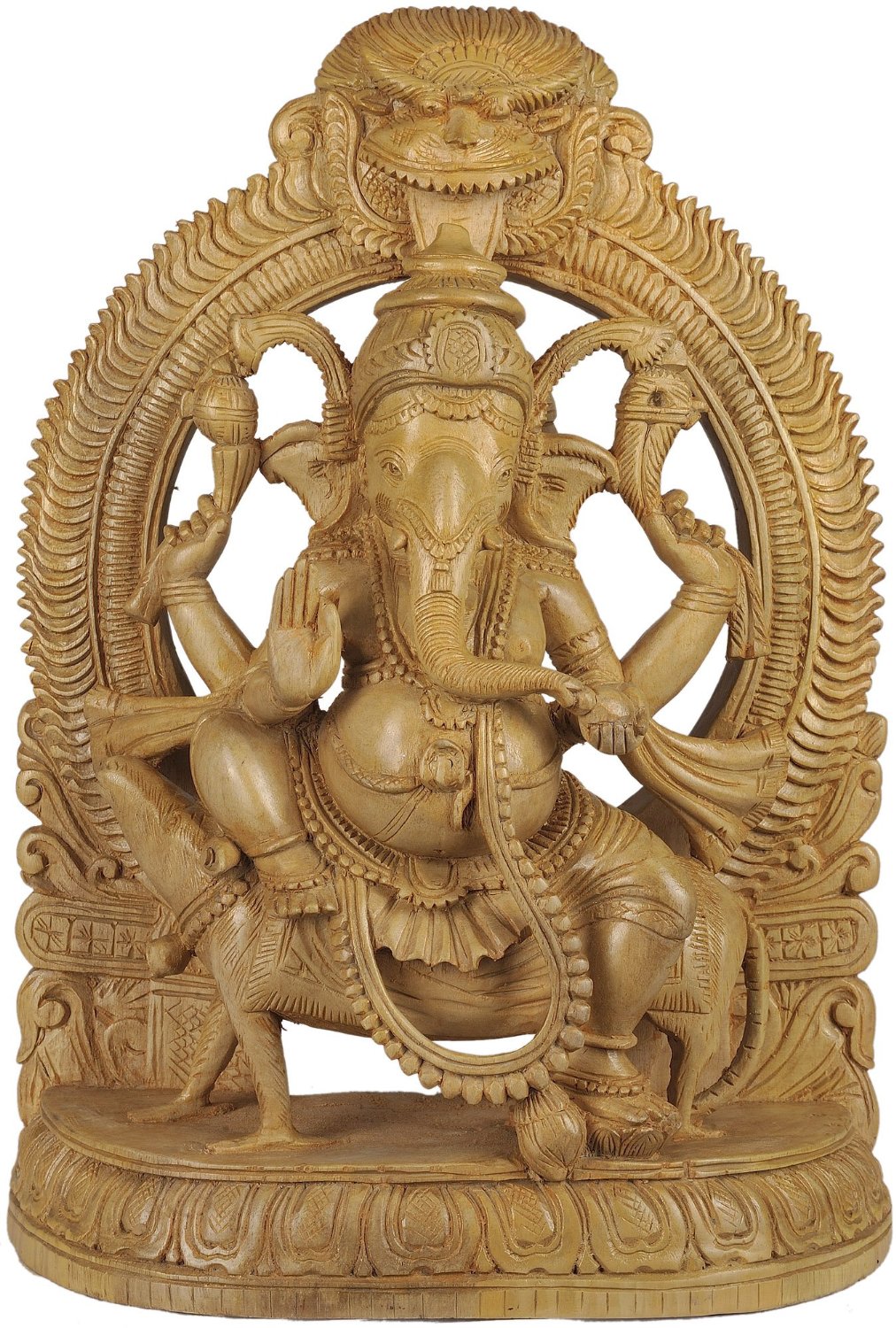
ganas under the leadership of Kartekiye and Ganesha. Later on Bhadrakali proceeded towards
the battlefield with a huge army as per the own wish of lord Shiva himself. At last lord Shiva
proceeded towards the battlefield accompanied by the deities. All the troops collected at the bank
of river Chandrabhaga and rested under the shade of a Banyan tree.
Shankhachuda handed over the kingdom to his son and went to his wife to take her permission
before going to the battlefield. His wife was reluctant to allow him to go, but he somehow
managed to convince her. He then proceeded towards the banks of Chandrabhaga with a huge
army.
A fierce battle started between the deities and the demons. Both of them attacked each other with
the most destructive weapons. But when the army of Chandrachuda began to dominate the fight,
the deities fled away and took the refuge of lord Shiva. They told Shiva of the number of deities
who had been killed while fighting.
After the defeat of the deities and the ganas Kartikeya and Ganesha went to fight Shankhachuda.
A spectacular battle was fought between Shankhachuda and both of them. Later on they were
joined by Bhadrakali. Bhadrakali would have devoured Shankhachuda without any problem, but
she spared his life because of the boon, given to him by Lord Brahma. Now it was the turn of
Lord Shiva to join the battle, but even he could not cause any harm to him because of lord
Brahma's boon.
While a tremendous battle was being fought between lord Shiva and Shankhachuda. Lord Vishnu
appeared and demanded the armour from Shankhachuda, which he had put on, his body in the
guise of a brahmin. Shankhachuda gave his armour to him without any kind of suspicion. Lord
Vishnu then went to Shankhachuda's wife in the guise of her husband i.e. Shankhachuda. He
destroyed the chastity of Tulsi, Shankhachuda's wife. Shankhachuda derived his power from the
chastity of his wife and it vanished the moment, her chastity was destroyed.
Bhadrakali was creating havoc in the army of Shankhachuda. Shankhachuda became very
furious and attacked Shiva. Shiva repulsed his assault and attacked him with his Trishul.
Shankhachuda who had become powerless was killed instantaneously. The deities were very
pleased at the death of Shankhachuda. After worshipping lord Shiva they went back to their
respective abodes.
TULSI CURSES LORD VISHNU
After being instructed by goddess Parvati, Lord Vishnu had gone to Tulsi in the guise of her
husband- Shankhachuda, so that the breach of Tulsi chastity could help lord Shiva to kill
Shankhachuda, who derived his power from Tulsi's chastity and virtuosity.
Initially Tulsi could not recognize lord Vishnu. She was extremely joyous at his arrival. But very
soon she was able to realize the real identity of lord Vishnu, who had disguised himself as her
husband.
She became very angry and cursed lord Vishnu to become a stone. She was crying unconsolably.
Lord Vishnu contemplated on Shiva as a result of which he appeared. Lord Shiva blessed Tulsi
that she would become the beloved of Lord Vishnu.
Due to Tulsi's curse, Lord Vishnu attained the form of Shaligram which is a stone and because of
lord Shiva's blessings. Tulsi leaves started being offered to the Shaligram, in the process of its
worship.