Mesothelioma
Mesothelioma is a rare cancer that begins in the lining of different internal organs of the body.
• Approximately 75% to 80% of mesotheliomas begin in the lining surrounding the lungs, called pleural mesothelioma. Pleural mesothelioma begins in the chest cavity, but it does not start in the lungs. As such, it is often incorrectly grouped with lung cancer.
• Peritoneal mesothelioma makes up about 10% to 20% of mesotheliomas. This type of mesothelioma begins in the tissue surrounding the abdominal area, called the peritoneum.
• The rarest types of mesothelioma include:
• Mesothelioma that begins in the lining around the heart, called the pericardium
• Mesothelioma that begins in the lining around a man’s testicles, called the tunica vaginalis
(ASCO)
Incidence and Mortality
It is estimated that about 3,000 people are diagnosed with mesothelioma each year in the United States. Mesothelioma occurs more often in men. The average age for a pleural mesothelioma diagnosis is 69. The number of people diagnosed with mesothelioma is no longer increasing as it has been in previous decades and may now be decreasing in men.
The 5-year survival rate tells you what percent of people live at least 5 years after the cancer is found. Percent means how many out of 100. The overall 5-year survival rate for people with mesothelioma is only 10% because it is usually diagnosed at a late stage.
The average survival time is defined as the amount of time that a person can live after the cancer is found. The median survival time is 21 months for stage I mesothelioma and 19 months for stage II mesothelioma. For stage III and stage IV mesothelioma, the median survival times are 16 months and 12 months respectively. The median is the midpoint, which means that about half of people with this type of cancer live longer and about half live for a shorter time.
The length of time a person lives after being diagnosed with mesothelioma depends on many factors, including the patient’s age. Patients diagnosed at a younger age often live longer. The type of mesothelioma can also influence survival rates. In particular, some patients with peritoneal mesothelioma have a tumor that grows very slowly and patients with peritoneal mesothelioma often have longer survival times. Patients who are able to receive surgery generally live longer than patients whose cancer has spread too far to be surgically removed.
Risk Factors
The following factors can raise a person’s risk of developing mesothelioma:
• Asbestos exposure. Between 70% to 80% of people diagnosed with mesothelioma have been exposed to asbestos. Asbestos is a group of natural minerals found in the earth. Because of its strong, flexible fibers and fire-proof properties, asbestos was once commonly added to cement, insulation, roof shingles, and other products. People involved in making products containing asbestos or installing or maintaining these products can breathe in or swallow the asbestos fibers. These fibers can also be carried in asbestos dust on clothing or personal items, exposing family members of the workers to potentially high levels of the minerals. Current safety regulations require people who work with asbestos to wear protective equipment and to shower and change clothes before leaving the workplace.
• Smoking. By itself, smoking does not increase the risk of mesothelioma, but the combination of smoking and asbestos exposure can increase the risk of certain types of cancer in the lungs.
• Radiation exposure. Radiation exposure may cause mesothelioma, such as when a patient has previously received radiation therapy for lymphoma.
• Genetics. About 1% of people with mesothelioma have inherited mesothelioma, meaning the risk of developing the disease was passed from parent to child within a family. Usually, it is due to a mutation or change in a gene called BAP1.
Clinical Features
People with mesothelioma may experience the following symptoms or signs. Sometimes, people with mesothelioma do not have any of these changes. Or, the cause of a symptom may be a different medical condition that is not cancer. Often, symptoms of mesothelioma may not appear until years or even decades after asbestos exposure.
If mesothelioma is in the chest area, called pleural mesothelioma, the symptoms may include:
• Shortness of breath caused by a thickening of the lining around the lung that limits how much the lungs can expand
• Build-up of fluid in the chest, called a pleural effusion
• Chest pain
If mesothelioma is in the abdominal area, called peritoneal mesothelioma, the symptoms may include:
• Abdominal pain
• Abdominal swelling from a buildup of fluid, called ascites
• Bowel obstruction
General symptoms of mesothelioma may include:
• Weight loss
• Fatigue
• Problems with blood clotting
• Fever
• Night sweats
Diagnosis
The diagnosis of mesothelioma is challenging, and it can be confused with other diseases, such as lung cancer.
Many people first notice symptoms of mesothelioma when they develop fluid in the space around the lungs or in the abdomen. Fluid around the lungs is called pleural effusion. Fluid in the abdomen is called ascites.
• Testing fluid from the lungs or abdomen. After numbing the skin, a needle is inserted into the space between the lung and the wall of the chest or in the abdomen. When the fluid is removed, it can be analyzed to find out if there are cancer cells in it. This is often one of the first steps in diagnosing mesothelioma. However, testing this fluid is usually not the only test needed to diagnose the disease. A biopsy is usually needed to diagnose mesothelioma.
• Biopsy. A biopsy is the removal of a small amount of tissue for examination under a microscope. Other tests can suggest that cancer is present, but only a biopsy can make a definite diagnosis. A pathologist then analyzes the sample(s). A pathologist is a doctor who specializes in interpreting laboratory tests and evaluating cells, tissues, and organs to diagnose disease. A biopsy is usually needed to confirm a diagnosis of mesothelioma. Sometimes, a needle can be used to get a sample of the lining. More often the doctor removes a tissue sample by using a thin, lighted tube inserted through a small incision in the body. This is called a video thoracoscopy when used to get samples from inside the chest. It is called a laparoscopy when used to get tissue samples from inside the abdomen. Sometimes, surgery is needed to get a sample of tissue.
Prognostic Factors
Prognosis in malignant mesothelioma is difficult to assess consistently because there is great variability in the time before diagnosis and the rate of disease progression. In large retrospective series of pleural mesothelioma patients, the following were found to be important prognostic factors:[Level of evidence: 3iiiA]
• Stage. • Age. • Performance status. • Histology.
Prognostic scoring systems
Two prognostic scoring systems have been developed for advanced unresectable mesothelioma and are used to stratify patients enrolling in clinical trials: the Cancer and Leukemia Group B (CALGB) index and the European Organization for the Research and Treatment of Cancer (EORTC) index.
CALGB index
The CALGB index was developed retrospectively using the clinical characteristics of 337 patients treated on clinical trials of chemotherapy for advanced mesothelioma during a 10-year period.[Level of evidence: 3iiiA] These characteristics were used collectively to define six prognostic groups with median survivals ranging from 13.9 months (Eastern Cooperative Oncology Group [ECOG] performance status [PS] = 0, age <49 years; or PS = 0, age ≥49 years and hemoglobin ≥14.6g/dL) to 1.4 months (PS = 1 or 2 and white blood cell [WBC] count ≥15.6 × 10⁹/L).
The prognostic value of the CALGB index was evaluated retrospectively in a phase II clinical trial of 105 patients.[Level of evidence: 3iii] Median survival in this study for patients in the best CALGB prognostic group was 29.9 months compared with 1.8 months for patients in the worst prognostic group. However, the intermediate groups 2 to 4 overlapped in their survival times.
EORTC index
The EORTC index was also developed retrospectively using the characteristics of 181 patients from five phase II clinical trials of chemotherapy during a 9-year period.[Level of evidence: 3iiiA] In a multivariate analysis, the following characteristics were associated with poorer survival:
• WBC count >8.3 × 10⁹/L.
• ECOG PS ≥1.
• Unconfirmed histology on central review.
• Nonepithelioid histology.
• Male gender.
Patients were allocated a numerical prognostic score based on each of these variables (+0.55 if WBC >8.3 × 10⁹/L, +0.60 if ECOG PS ≥1, +0.52 if unconfirmed histology, and +0.60 if male gender). Subsequently, patients were classified into two prognostic groups that included low-risk patients with a prognostic score of 1.27 or lower (0–2 risk factors) and high-risk patients with a prognostic score higher than 1.27 (3–5 risk factors). High-risk patients had a relative risk of death of 2.9 compared with low-risk patients, P < .001; the 1-year survival rate was 40% for the low-risk group compared with 12% for the high-risk group.
Follow-up and Survivorship
Multimodality therapy incorporating radical surgery (extrapulmonary pneumonectomy or radical pleurectomy with decortication) with or without chemotherapy, administered with or without radiation, may be considered for patients with limited disease and has been associated with a relatively long survival in observational series.[Level of evidence: 3iiiA] For patients treated with aggressive surgical approaches, factors associated with improved long-term survival include the following:[Level of evidence: 3iiiD]
• Epithelioid histology.
• Negative lymph nodes.
• Negative surgical margins.
For patients treated with aggressive surgical approaches, nodal status is an important prognostic factor. Median survival has been reported as 16 months for patients with malignant pleural disease and 5 months for patients with extensive disease. In some instances, the tumor grows through the diaphragm, making the site of origin difficult to assess. Cautious interpretation of treatment results with this disease is imperative because of the selection differences among series. Effusions, both pleural and peritoneal, represent major symptomatic problems for at least 66% of the patients.
(Refer to the PDQ summary on Cardiopulmonary Syndromes for more information.)
Cellular Classification of Malignant Mesothelioma
Histologically, these tumors are composed of spindle cells (sarcomatoid) or epithelial elements, or both (biphasic). Desmoplastic mesothelioma, consisting of bland tumor cells between dense bands of stroma, is a subtype of sarcomatoid mesothelioma. The epithelioid form is occasionally confused with lung adenocarcinoma or metastatic carcinomas. Epithelioid tumors account for approximately 60% of mesothelioma diagnoses. Attempts to diagnose by cytology or needle biopsy of the pleura are often unsuccessful. It can be especially difficult to differentiate mesothelioma from adenocarcinoma in small tissue specimens. Thoracoscopy can be valuable in obtaining adequate tissue specimens for diagnostic purposes.
Examination of the gross tumor at surgery and use of special stains or electron microscopy can often help to determine diagnosis. Pancytokeratin stains are positive in nearly all mesotheliomas. Particularly useful immunohistochemical stains for the differential diagnosis of epithelioid mesothelioma include cytokeratin 5 and 6, calretinin, WT-1, and D2-40. Calretinin and D2-40 positivity in combination with pancytokeratin positivity is most useful to distinguish sarcomatoid mesothelioma from sarcoma and other histologies. Histologic appearance seems to be of prognostic value, and most clinical studies show that patients with epithelial mesotheliomas have a better prognosis than patients do with sarcomatoid or biphasic mesotheliomas.
.
Stage Information for Malignant Mesothelioma
Patients with stage I disease have a significantly better prognosis than patients do with advanced stages. Because of the relative rarity of this disease, exact survival information based on stage is limited.
Staging Systems
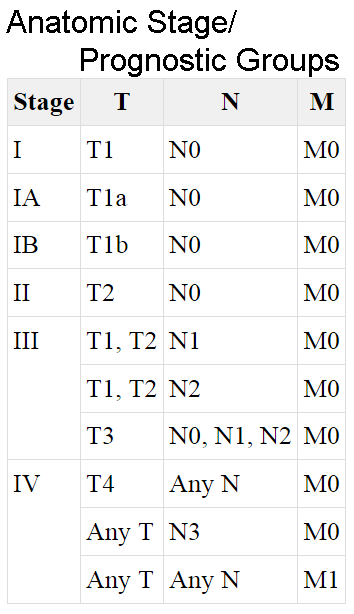
AJCC and UICC TNM Staging for Diffuse Malignant Pleural Mesothelioma.
DEFINITIONS OF TNM
Primary Tumor (T)
TX - Primary tumor cannot be assessed.
T0 - No evidence of primary tumor.
T1 - Tumor limited to the ipsilateral parietal pleura with or without mediastinal pleura and with or without diaphragmatic pleural involvement.
T1a - No involvement of the visceral pleura.
T1b - Tumor also involving the visceral pleura.
T2 - Tumor involving each of the ipsilateral pleural surfaces (parietal, mediastinal, diaphragmatic, and visceral pleura) with at least one of the following: involvement of diaphragmatic muscle; extension of tumor from visceral pleura into the underlying pulmonary parenchyma.
T3 - Locally advanced but potentially resectable tumor. Tumor involving all of the ipsilateral pleural surfaces (parietal, mediastinal, diaphragmatic, and visceral pleura) with at least one of the following: involvement of the endothoracic fascia; extension into the mediastinal fat; solitary, completely resectable focus of tumor extending into the soft tissues of the chest wall; nontransmural involvement of the pericardium.
T4 - Locally advanced technically unresectable tumor. Tumor involving all of the ipsilateral pleural surfaces (parietal, mediastinal, diaphragmatic, and visceral pleura) with at least one of the following: diffuse extension or multifocal masses of tumor in the chest wall, with or without associated rib destruction; direct transdiaphragmatic extension of tumor to the peritoneum; direct extension of tumor to the contralateral pleura; direct extension of tumor to mediastinal organs; direct extension of tumor into the spine; tumor extending through to the internal surface of the pericardium with or without a pericardial effusion or tumor involving the myocardium.
Regional Lymph Nodes (N)
NX - Regional lymph nodes cannot be assessed.
N0 - No regional lymph node metastases.
N1 - Metastases in the ipsilateral bronchopulmonary or hilar lymph nodes.
N2 - Metastases in the subcarinal or the ipsilateral mediastinal lymph nodes including the ipsilateral internal mammary and peridiaphragmatic nodes.
N3 - Metastases in the contralateral mediastinal, contralateral internal mammary, ipsilateral or contralateral supraclavicular lymph nodes.
Distant Metastasis (M)
M0 - No distant metastasis.
M1 - Distant metastasis present.
Stage Grouping Mesothelioma
Treatment for Mesothelioma
Treatment Option Overview
Standard treatment for all but localized mesothelioma is generally not curative. Although some patients will experience long-term survival with aggressive treatment approaches, it remains unclear if overall survival (OS) has been significantly altered by the different treatment modalities or by combinations of modalities.
Extrapleural pneumonectomy in selected patients with early-stage disease may improve recurrence-free survival, but its impact on OS is unknown. Pleurectomy and decortication can provide palliative relief from symptomatic effusions, discomfort caused by tumor burden, and pain caused by invasive tumor. Trimodality therapy refers to a combination of chemotherapy, definitive surgery, and radiation therapy. Because of the rarity of mesothelioma and the complexities of patient selection, surgical technique, and optimal sequencing of therapy, delivery of such therapy in centers with medical personnel who have established experience and expertise in the management of mesothelioma has shown better results. Operative mortality from pleurectomy with decortication is less than 2%, while mortality from extrapleural pneumonectomy has ranged from 6% to 30%.
Several single-arm, phase II studies have demonstrated prolonged survival times (compared with historic controls) for selected patients who received adjuvant radiation therapy after definitive surgery. The use of radiation therapy in pleural mesothelioma has also been shown to alleviate pain in the majority of patients treated; however, the duration of symptom control is short-lived. Other single-arm, phase II studies investigated neoadjuvant chemotherapy (mainly with platinum and pemetrexed or gemcitabine) followed by definitive surgery followed by adjuvant radiation. These studies have also shown prolonged survival compared with historical controls; however, this advantage has yet to be confirmed in a randomized study.
Localized Malignant Mesothelioma (Stage I) Treatment
Standard Treatment Options for Localized Malignant Mesothelioma (Stage I)
1. Solitary mesotheliomas: Surgical resection en bloc including contiguous structures to ensure wide disease-free margins. Sessile polypoid lesions are treated with surgical resection to ensure maximal potential for cure.
2. Intracavitary mesothelioma:
◦ Palliative surgery (i.e., pleurectomy and decortication) with or without postoperative radiation therapy.
◦ Extrapleural pneumonectomy.
◦ Palliative radiation therapy.
Treatment options under clinical evaluation for localized malignant mesothelioma (stage I)
1. Intracavitary chemotherapy after resection.
2. Multimodality therapy.
3. Other clinical trials.
Advanced Malignant Mesothelioma (Stages II, III, and IV) Treatment
Standard treatment options:
1. Symptomatic treatment to include drainage of effusions, chest tube pleurodesis, or thoracoscopic pleurodesis. (Refer to the PDQ summary on Cardiopulmonary Syndromes for more information.)
2. Palliative surgical resection in selected patients.
3. For patients with pain related to their cancer, palliative radiation therapy is a consideration.
4. First-line combination chemotherapy with cisplatin, pemetrexed, and bevacizumab showed improved survival compared with single-agent cisplatin.[Level of Evidence: 1iiA]
5. Multimodality clinical trials.
6. Intracavitary therapy. Intrapleural or intraperitoneal administration of chemotherapeutic agents (e.g., cisplatin, mitomycin, and cytarabine) has been reported to produce transient reduction in the size of tumor masses and temporary control of effusions in small clinical studies. Additional studies are needed to define the role of intracavitary therapy.
Treatment trials for advanced malignant mesothelioma
1. Many phase II trials of chemotherapy for the treatment of advanced malignant mesothelioma have been reported.
2. A randomized, phase III trial demonstrated the safety and efficacy of pemetrexed, an antifolate, and cisplatin in chemotherapy-naive patients with malignant mesothelioma who were not eligible for curative surgery.[Level of evidence: 1iiA]
This trial compared pemetrexed (500 mg/m2) and cisplatin (75 mg/m2 on day 1) with cisplatin alone (75 mg/m2 on day 1 intravenously every 21 days). With 456 patients enrolled in the trial, 226 patients received pemetrexed plus cisplatin; 222 patients received cisplatin alone; and 8 patients did not receive therapy.
a. After 117 patients had enrolled, folic acid and vitamin B12 were added to reduce toxic effects.
■ Folic acid (350–1,000 µg orally) was given daily, beginning 1 to 3 weeks before the first chemotherapy dose and continuing daily until 1 to 3 weeks after treatment ended.
■ A vitamin B12 injection (1,000 µg intramuscularly) was administered 1 to 3 weeks before the first chemotherapy dose and was repeated approximately every 9 weeks until treatment ended.
b. Dexamethasone (4 mg) or an equivalent corticosteroid was administered orally twice daily for skin rash prophylaxis to all patients 1 day before, on the day of, and 1 day after each pemetrexed dose.
c. In an analysis of all patients who were randomly assigned and treated, the combination of pemetrexed and cisplatin was associated with a statistically significant improvement in survival compared with cisplatin alone.
■ The median survival was 12.1 months in the pemetrexed-plus-cisplatin arm versus 9.3 months in the cisplatin-alone arm (P = .020).
■ The hazard ratio (HR) for death of patients in the pemetrexed-plus-cisplatin arm versus those in the control arm was 0.77.
■ Median time-to-progression was significantly longer in the pemetrexed-plus-cisplatin arm (5.7 months vs. 3.9 months, P = .001).
d. This superiority in the combination arm was also demonstrated in the vitamin-supplemented subgroup.
■ The median survival was 13.3 months in the combination arm and 10.0 months in the cisplatin-alone arm (P = .051).
■ The principal adverse effects of the pemetrexed-plus-cisplatin regimen were myelosuppression, fatigue, nausea, vomiting, and dyspnea.
■ Most grade 3 to 4 adverse effects were significantly reduced by vitamin supplementation, without any decrease in efficacy.
3. A randomized, phase III trial of 250 patients was performed by the European Organization for Research and Treatment of Cancer (EORTC-08983 [NCT00004920]) to compare cisplatin alone with the combination of raltitrexed, a thymidine synthase inhibitor, and cisplatin in first-line treatment of patients with malignant pleural mesothelioma. Cisplatin (80 mg/m2 intravenously) was given on day 1, alone or combined with raltitrexed (3 mg/m2).
◦ No toxic deaths resulted, and the main grade 3 or 4 toxicities observed were neutropenia and emesis, which were reported twice as often in the combination arm.
◦ Among 213 patients with measurable disease, the response rate for cisplatin alone was 13.6%, while the response rate in the combination arm was 23.6% (P = .056). No difference in quality of life was observed.
◦ The combination arm was associated with increased survival. Median overall survival (OS) was 8.8 months for single-agent cisplatin versus 11.4 months in the combination arm, and the 1-year survival rate was 40% versus 46% (P = .048).[Level of evidence: 1iiA]
4. A randomized, controlled, open-label, phase III trial (IFCT-GFPC-0701 [NCT00651456]) evaluated the addition of bevacizumab to chemotherapy and showed an improved OS with the three-drug regimen. The trial included 448 patients with unresectable malignant pleural mesothelioma who had not received previous chemotherapy, had an Eastern Cooperative Oncology Group performance status of 0 to 2, and had no contraindications to bevacizumab, including the use of antiplatelet agents, anticoagulants, and nonsteroidal anti-inflammatory agents. Patients were randomly allocated to receive intravenous pemetrexed (500 mg/m2) plus cisplatin (75 mg/m2) (PC) with or without bevacizumab (15 mg/kg) (PCB) in 21-day cycles for up to six cycles, until progression or toxic effects were seen.
a. The primary outcome was OS in the intention-to-treat population.
b. OS was significantly longer with PCB (median, 18.8 months; 95% confidence interval [CI], 15.9–22.6) than with PC (median, 16.1 months; 95% CI, 14.0–17.9; HR, 0.77; 0.62–0.95; P = .0167).
c. Overall, 158 (71%) of 222 patients given PCB and 139 (62%) of 224 patients given PC had grade 3 to 4 adverse events.
■ Patients treated with PCB had more grade 3 or higher hypertension (51 [23%] of 222 vs. 0) and thrombotic events (13 [6%] of 222 vs. 2 [1%] of 224) than did patients treated with PC.[Level of evidence: 1iiA]
Malignant Peritoneal Mesothelioma
A multi-institutional registry study evaluated cytoreductive surgery combined with hyperthermic intraperitoneal chemotherapy (HIPEC) for diffuse, malignant, peritoneal mesothelioma. Among 401 patients, 187 (46%) had complete or near-complete cytoreduction, and 372 (92%) received HIPEC. Of the HIPEC patients, 311 (83%) received cisplatin and doxorubicin. The median follow-up period was 33 months (range, 1–235 months). Grade 3 to 4 complications were seen in 127 (31%) of the 401 patients, and 9 patients (2%) died perioperatively.
The mean length of hospital stay was 22 days (standard deviation, 15 days). The overall median survival was 53 months (1–235 months), and 3- and 5-year survival rates were 60% and 47%, respectively. Four prognostic factors were independently associated with improved survival in the multivariate analysis:
• Epithelial subtype (P < .001).
• Absence of lymph node metastasis (P < .001).
• Completeness of cytoreduction (CC) scores of CC-0 or CC-1 (P < .001).
• HIPEC (P = .002).
This kind of analysis is subject to the biases of strong patient selection.
† For the treatment of malignant peritoneal mesothelioma
Intraperitoneal Cisplatin and mitomycin C
Four to 6 L of isotonic dialysis fluid was circulated at a flow rate of 500 to 700 mL/min and heated to achieve an intraperitoneal temperature between 42 to 45 degrees C.
Intraperitoneal chemotherapy with mitomycin 0.5 mg/kg in combination with cisplatin 0.7 mg/kg was administered over 90 minutes.
5-year overall survival was 28.9%; median overall survival was 35.6 months.
Recurrent Malignant Mesothelioma
Treatment of patients with recurrent malignant mesothelioma usually utilizes procedures and agents not previously employed in the initial treatment attempt. No standard treatment approaches have been proven to improve survival or control symptoms for a prolonged period. Selected patients with localized disease recurrence may be candidates for additional chest wall resection. One trial of 47 carefully selected patients at a single institution indicated that chest wall resection could be safely performed; time-to-recurrence from initial resection appeared to be predictive of expected survival benefit and is factored into decision-making.[Level of evidence: 3iiiA]
Patients with recurrence are candidates for phase I and II clinical trials evaluating new targeted therapies, biologicals, chemotherapeutic agents, or physical approaches. Patients with recurrent malignant mesothelioma who have not received chemotherapy previously are candidates for first-line chemotherapy with cisplatin and pemetrexed or cisplatin and raltitrexed. However, patients with recurrent malignant mesothelioma who undergo surgery, or who do not receive chemotherapy as part of the primary treatment and whose disease recurs subsequently, are candidates for chemotherapy.
A large randomized study compared pemetrexed with best supportive care in 243 patients who received one previous regimen of chemotherapy that did not include pemetrexed.[Level of evidence: 1iiA] No survival benefit was shown in patients who received pemetrexed, although the progression-free survival rate, time-to-progression, and the response rates favored the pemetrexed arm.
Systemic therapy
Systemic therapies include chemotherapy, targeted therapy, and immunotherapy.
Chemotherapy
Chemotherapy is the most common type of systemic therapy used for mesothelioma. It usually works by ending the cancer cells’ ability to grow and divide. Systemic therapy is given by a medical oncologist, a doctor who specializes in treating cancer with medication.
Systemic chemotherapy gets into the bloodstream to reach cancer cells throughout the body. Common ways to give systemic chemotherapy for mesothelioma include an intravenous (IV) tube placed into a vein using a needle. Chemotherapy can also be given directly to the abdomen after surgery for peritoneal mesothelioma, called intraperitoneal chemotherapy.
A systemic chemotherapy regimen, or schedule, usually consists of a specific number of cycles given over a set period of time. A patient may receive 1 drug at a time or combinations of different drugs given at the same time.
• Pleural mesothelioma. The recommended treatment for patients who haven’t yet received treatment is the combination of pemetrexed (Alimta) and cisplatin (Platinol) or carboplatin (Paraplatin). These medications are given in 4 to 6 treatment cycles that each last 3 weeks. There can be significant side effects with this combination of drugs. Some patients may receive a single drug if there are too many side effects from giving both drugs. Bevacizumab (see Targeted Therapy, below) may be added to chemotherapy for some patients.
• Peritoneal mesothelioma. As mentioned in the surgery section (above), chemotherapy is often given directly into the abdomen after surgery. IV chemotherapy is also used. Just as with pleural mesothelioma, the combination of pemetrexed with cisplatin or carboplatin are most often used for treatment.
The side effects of chemotherapy depend on the individual and the dose used, but they can include fatigue, risk of infection, nausea and vomiting, hair loss, loss of appetite, and diarrhea. The most common side effects from the drugs used to mesothelioma include damage to the kidneys, numbness and tingling in the fingers or toes, decreased hearing, rash, a higher risk of infection from a low white blood count, or anemia. Patients may experience other side effects as well. Patients receiving these types of chemotherapy are given the vitamins B12 and folic acid to lower the risk of these side effects. Other medications, such as those used to prevent vomiting, are also available to relieve many of these side effects. These side effects usually go away after treatment is finished.
Learn more about the basics of chemotherapy and preparing for treatment. The medications used to treat cancer are continually being evaluated. Talking with your doctor is often the best way to learn about the medications prescribed for you, their purpose, and their potential side effects or interactions with other medications. Learn more about your prescriptions by using searchable drug databases.
Targeted therapy
Targeted therapy is a treatment that targets the cancer’s specific genes, proteins, or the tissue environment that contributes to cancer growth and survival. This type of treatment blocks the growth and spread of cancer cells while limiting damage to healthy cells.
Recent studies show that not all tumors have the same targets. To find the most effective treatment, your doctor may run tests to identify the genes, proteins, and other factors in your tumor. This helps doctors better match each patient with the most effective treatment whenever possible. In addition, many research studies are taking place now to find out more about specific molecular targets and new treatments directed at them. Learn more about the basics of targeted treatments.
For pleural mesothelioma, the drug bevacizumab (Avastin) may be added to chemotherapy for patients who do not have health problems that would prevent them from receiving it. Bevacizumab is a type of drug called and anti-angiogenic. Anti-angiogenesis is focused on stopping angiogenesis, which is the process of making new blood vessels. Because a tumor needs the nutrients delivered by blood vessels to grow and spread, the goal of anti-angiogenesis therapies is to “starve” the tumor. Talk with your doctor about possible side effects for a specific medication and how they can be managed.
Immunotherapy
Immunotherapy, also called biologic therapy, is designed to boost the body's natural defenses to fight the cancer. It uses materials made either by the body or in a laboratory to improve, target, or restore immune system function.
For mesothelioma, pembrolizumab (Keytruda) and a combination of ipilimumab (Yervoy) and nivolumab (Opdivo) may be options for patients who have already received chemotherapy.
Different types of immunotherapy can cause different side effects. Talk with your doctor about possible side effects for the immunotherapy recommended for you. Learn more about the basics of immunotherapy.
Systemic Treatment Regimens for Mesothelioma
■ For the treatment of unresectable malignant pleural mesothelioma
Cisplatin + Pemetrexed
Cisplatin + Pemetrexed. Repeat every 21 days.
Pemetrexed 500 mg/m2 IV over 10 minutes.
Cisplatin 75 mg/m2 IV over 2 hours on day 1, beginning approximately 30 minutes after the end of the pemetrexed infusion.
Premedicate pemetrexed with Dexamethasone 4 mg by mouth twice daily for 3 days, beginning the day before pemetrexed administration to reduce cutaneous reactions.
Folic acid (400 to 1,000 mcg by mouth daily) and vitamin B12 (1 mg IM every 3 months) beginning 7 days prior to the first dose of pemetrexed and continuing for 21 days after the last dose to reduce the severity and frequency of hematologic and GI toxicities.
(After the first dose, vitamin B12 may be given on the same day as pemetrexed. Do not substitute oral for IM vitamin B12.)
Pemetrexed plus cisplatin for chemotherapy-naive patients with malignant mesothelioma (n = 226) resulted in a median survival time of 12.1 months compared with 9.3 months for recipients of cisplatin monotherapy (n = 222) (HR 0.77; p = 0.02); approximately 75% of patients had either stage 3 or 4 disease. Of patients who received supplementation with folic acid and vitamin B12, the median overall survival was 13.2 months vs. 9.4 months, respectively (HR 0.71; p = 0.022). The median time to progressive disease in the intent-to-treat group (regardless of supplementation) was 5.7 months in the pemetrexed group and 3.9 months in those who received cisplatin monotherapy (HR 0.68; p = 0.001), and the tumor response rate was 41.3% compared with 16.7%, respectively (p < 0.001).
† For the treatment of malignant mesothelioma.
Cisplatin + Gemcitabine
(GC regimen) every 28 days for 6 cycles.
Cisplatin 100 mg/m2 IV on day 1
Gemcitabine 1000 mg/m2 IV on days 1, 8 and 15. ((IV over 30 to 60 minutes)).
Alternately, cisplatin 80 mg/m2 IV on day 1 in combination with gemcitabine 1250 mg/m2 IV on days 1 and 8, every 21 days for 6 cycles, has also been studied.
Intraperitoneal Chemotherapy for Peritoneal Mesothelioma
† For the treatment of malignant peritoneal mesothelioma
Intraperitoneal Cisplatin and mitomycin C
Four to 6 L of isotonic dialysis fluid was circulated at a flow rate of 500 to 700 mL/min and heated to achieve an intraperitoneal temperature between 42 to 45 degrees C.
Intraperitoneal chemotherapy with mitomycin 0.5 mg/kg in combination with cisplatin 0.7 mg/kg was administered over 90 minutes.
5-year overall survival was 28.9%; median overall survival was 35.6 months.
Chemotherapy + Targeted Agent
† For the treatment of previously untreated advanced, unresectable malignant pleural mesothelioma
Cisplatin + Pemetrexed + bevacizumab
Cisplatin 75 mg/m2 IV over 2 hours, beginning approximately 30 minutes after the end of the pemetrexed infusion,
plus bevacizumab 15 mg/kg IV over 30 to 90 minutes (1st infusion: 90 minutes; if tolerated, 2nd infusion: 60 minutes; if tolerated, subsequent infusions: 30 minutes) on day 1.
Prior to administration of cisplatin on day 1, give pemetrexed 500 mg/m2 IV over 10 minutes. Repeat every 21 days for 6 cycles.
After completion of the last cycle, begin maintenance bevacizumab 15 mg/kg IV over 30 to 90 minutes every 21 days until disease progression or unacceptable toxicity.
Premedicate pemetrexed with dexamethasone 4 mg by mouth twice daily for 3 days, beginning the day before pemetrexed administration to reduce cutaneous reactions.
Additionally, supplement with folic acid (400 to 1,000 mcg by mouth daily) and vitamin B12 (1 mg IM every 3 months) beginning 7 days prior to the first dose of pemetrexed and continuing for 21 days after the last dose to reduce the severity and frequency of hematologic and GI toxicities; after the first dose, vitamin B12 may be given on the same day as pemetrexed. Do not substitute oral for IM vitamin B12.