Hinduism
Hinduism is the dominant religion, or way of life, of the Indian subcontinent, and consists of many diverse traditions. It includes Shaivism, Vaishnavism and Shaktism among numerous other traditions, and a wide spectrum of laws and prescriptions of "daily morality" based on karma, dharma, and societal norms. Hinduism is a categorisation of distinct intellectual or philosophical points of view, rather than a rigid, common set of beliefs.
Hinduism has been called the "oldest religion" in the world, and some practitioners refer to it as Sanātana Dharma, "the eternal law" or the "eternal way beyond human origins. It prescribes the "eternal" duties, such as honesty, mercy, purity, self-restraint, among others.
Western scholars regard Hinduism as a fusion or synthesis of various Indian cultures and traditions, with diverse roots and no single founder. This "Hindu synthesis" emerged around the beginning of the Common Era, and co-existed for several centuries with Buddhism, to finally gain the upper hand in most royal circles during the 8th century CE. From northern India this "Hindu synthesis", and its societal divisions, spread to southern India and parts of Southeast Asia.
Since the 19th century, under the dominance of western colonialism and Indology, when the term "Hinduism" came into broad use, Hinduism has re-asserted itself as a coherent and independent tradition. The popular understanding of Hinduism has been dominated by "Hindu modernism", in which mysticism and the unity of Hinduism have been emphasised. During 20th century, Hindutva ideology, a part of the Hindu politics emerged as a political force and a source for national identity in India.
Hindu practices include daily rituals such as puja (worship) and recitations, annual festivals, and occasional pilgrimages. Select group of ascetics leave the common world and engage in lifelong ascetic practices to achieve moksha.
Hindu texts are classified into Śruti ("heard") and Smriti ("remembered"). These texts discuss theology, philosophy, mythology, Vedic yajna and agamic rituals and temple building, among other topics. Major scriptures include the Vedas, Upanishads (both Śruti), Mahabharata, Ramayana, Bhagavad Gita, Puranas, Brahma Sutras, Yoga Vasistha, Yoga Sutras of Patanjali, Manusmṛti, and Agamas (all smriti).
Hinduism, with about one billion followers is the world's third largest religion, after Christianity and Islam.
(Wikipedia)
Temple on Ganga

#1: Temple on Ganga
This is the famous KALI temple at DAKSHINESWAR, in greater Kolkata(Calcutta), where the world-renowned sage RAMAKRISHNA PARAMAHANSA lived for many years.
Image source: www.flickr.com
Murugan Temple at Vadapalani, Chennai, India

#2: Murugan Temple at Vadapalani, Chennai, India.
Image source: www.flickr.com
Reference: en.wikipedia.org
Sri Thendayuthapani Temple, Singapore

#3: Sri Thendayuthapani Temple, Singapore
Image source: www.flickr.com
Reference: en.wikipedia.org
Shri Lakshmi Narayan Temple in Delhi

#4: Laxminarayan Temple in Delhi, India
Image source: www.flickr.com
Reference: en.wikipedia.org

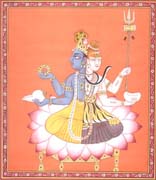


Ten avatars (incarnations) of Visnu

#10: Ten avatars (incarnations) of Visnu
Image source: en.wikipedia.org: Buddha's entry into Parinirvana

Tridevi

#12: Tridevi
The conjoined image of three especially popular manifestations of the Hindu Divine Mother: Lakshmi (wealth/material fulfillment), Parvati (Power/love/spiritual fulfillment), and Saraswati (learning and arts/cultural fulfillment), left to right.
Image source: en.wikipedia.org
Ganesha

Image source: www.flickr.com
Reference: en.wikipedia.org: Ganesha
Reference: www.sscnet.ucla.edu: Ganesha
Lord Murugan at Batu Caves


#14: Lord Murugan at Batu Caves
Batu Caves outside Kuala Lumpur, Caves is a limestone hill, which has a series of caves and cave temples. The big gold statue is of Lord Murugan which is 43m high. The cave is one of the most popular Hindu shrines outside India, dedicated to Lord Murugan. It is the focal point of Hindu festival of Thaipusam in Malaysia.
Image sources: www.flickr.com
Multi[le sources
Reference: Wikipedia Batu Caves
Image inside the cave Image sources: Multi[le sources;


Divine bird: Garuda

#17: Divine bird: Garuda carrying Vishnu and his wife Lakshmi.
Image source: photobucket.com

A wall painting of Swastika

#19: A wall painting of Swastika; village near Coimbatore, Tamilnadu, India
Image source: commons.wikimedia.org
AUM symbol in Devenagari, Tamil and Tibetan script

#20: AUM symbol in Devenagari, Tamil and Tibetan script
Image source: www.flickr.com
A "Sadhu" takes a dip at the confluence of the river Ganges

#21: A "Sadhu" takes a dip at the confluence of the river Ganges
A "Sadhu", or Hindu holy man, takes a dip at the confluence of the river Ganges and the Bay of Bengal, ahead of the "Makar Sankranti" festival at Sagar Island, south of Kolkata, India.
Image sources: www.bbc.com
www.msn.com
www.euronews.com
www.rferl.org
Life is a journey, not a destination.

#22: Life is a journey, not a destination.
COMPARATIVE RELIGION Taoism: Shit Happens Buddhism: If shit happens, its really not shit. Zen: What is the sound of shit happening. Hinduism: This shit happened before. Protestant: Shit won't happen if you work harder. Catholicism: If shit happens, I deserved it. Voodoo: Shit does not just happen. It is done for you. John Gallery: Let me paint this shit I really would like the Muslim version. Islam: Hmmm maybe... There is only one shit, and we be it.
Image source: photobucket.com

Aishwarya Rai, an Indian actress

#24: Aishwarya Rai, an Indian actress
Image source: photobucket.com
Sri Ranganathaswamy Temple, Srirangam

Sri Ranganathaswamy Temple, Srirangam, Tiruchirapalli, Tamil Nadu, India


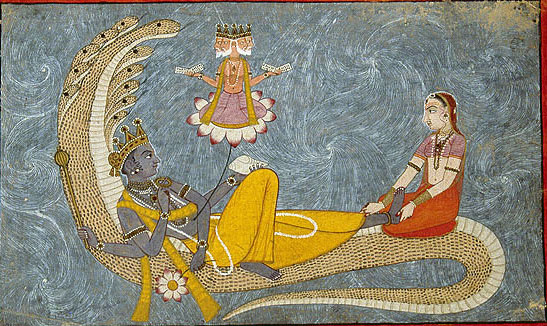
Maha Visnu in the cosmic ocean

#6: Maha Visnu in the cosmic ocean
Image source: www.harekrsna.com and satsangh.mantraaonline.com
Hare Krishna

Image source: www.veda.harekrsna.cz
Hinduism/Indian Philosophy: THE MEETING OF EAST AND WEST